

As a character actress, Una O'Connor
deserved great praise and honor.No matter who else was on the screen
with a look or her voice she could steal any scene.

"We do not enjoy a story fully at the first reading. Not till the curiosity, the sheer narrative lust, has been given its sop and laid asleep, are we at leisure to savour the real beauties. Till then, it's like wasting great wine on a ravenous natural thirst which merely wants cold wetness." - C. S. Lewis
The most recent issue of Gilbert (September/October 2022) contains an essay by Mark Johnson, "Old Friends Pay a Return Visit."
In the essay, Johnson notes his habit of reading classic novels every night. He has a fondness for 19th Century novels - a fondness I share.
But he ran into a problem.
After years of reading, he had read them all, even down to the "fourth tier." With nothing new to read, he was faced with the terrible prospect of "mid-life acedia.".
Then one night he dipped into Middlemarch, a book he'd already read, to look a few of his favorite pages, and found himself caught up in the book again and completely reread it, enjoying it just as much - if not more - than the first time he read it.
Eureka!
So now he is rereading some of his "old friends."
In rereading, he discovered he is better able to keep the characters or plot twists straight, and found he is able to relax more with the books. In the process, he also realized that, "Some aspects of a novel are literally impossible to recognize until a second read." He is able to make connections; he has a greater level of maturity and understanding as well. "I'm now aware that the art inside great literature unfolds and blooms most vividly upon a second or subsequent read."
This essay resonated with me. I am also in the process of rereading. I just include more than the 19th Century novels that I like.
Rereading is not a new thing for me. As a teacher, I had to reread some of the books I was teaching to keep them fresh. I don't know how many times I've reread To Kill a Mockingbird, Jane Eyre, Pride and Prejudice, and various of Shakespeare's plays. While I enjoyed the rereads, the purpose was professional.
Now I am rereading for pleasure books that I read 30-40-50 years ago. When I first read them, it was often because I had to read them for a class I was taking or teaching, or because I felt I was "supposed" to read them. Like Johnson, I find myself now not only enjoying them, but also that I am better able to appreciate their artistry and insights into human nature and the spiritual.
I don't, however, limit myself to 19th Century novels, though they are certainly in the mix. In recent months, I've reread St. Augustine's Confessions, Brideshead Revisited, Chesterton's "biography" of St. Thomas Aquinas, The Screwtape Letters, and The Lord of the Rings trilogy, to name a few. I'm currently rereading The Imitation of Christ, and The Brothers Karamazov.
Unlike Johnson, there are books I haven't read before - as an English and History teacher, I was often reading books for class, and did not have time for as much pleasure reading as I desired, and before that when I was a reporter, I was constantly reading the books and essays and background information of the people whom I would interview or the topics I was covering. So now I mix in the books I always wanted to read. The Idiot, for example, or Oliver Twist.
Now that I'm retired, many more first reads and rereads await.
Johnson's essay revealed to me a kindred spirit. And as I reread, I, like him, will "make sure I don't waste great wine."


In addition to the wonderful talks and getting to interact with fellow Chestertonians at the Rochester Chesterton Conference, one of the joys is perusing the books/magazines/etc. for sale. Dale Ahlquist and Joseph Pearce are almost always there hawking their books and materials.
Crisis Magazine - "A Voice for the Faithful Catholic Laity" - has been featuring a series of articles about some of our favorite authors.
The recent articles include:


EWTN rebroadcasts this wonderful show Monday mornings at 6:30. What a pleasant way to begin the week.
Though it is odd seeing Dale without a beard!
Dale's article printed in Catholic World Report -
Because GKC became Catholic, I became Catholic. And so have countless others.

When G.K. Chesterton was received into the Catholic Church one hundred years ago, on Sunday, July 30, 1922, it was big news. Except it wasn’t. It didn’t quite qualify as “news” because nobody knew about it. The two priests who received him into the Church – Fr. John O’Connor, his long-time friend who was also the inspiration for Chesterton’s immortal fictional detective Father Brown, and Dom Ignatius Rice, a Benedictine monk from Douai Abbey – vowed to say nothing about the ceremony. Not for any religious reasons. They just wanted to see how long it would take the press to find out.
It took three weeks.
And it was big news when it was finally reported. Except it wasn’t. At least for part of the reading public. Many of them thought Chesterton was already Catholic. After all, he’d been defending the Catholic Church for years, and taking the Catholic position at every turn, on every topic, and in every controversy. And he’d already written two dozen popular stories featuring the aforementioned Father Brown.
But there was also many Chesterton admirers and devotees who were genuinely surprised because they refused to believe he would ever do something so inconceivable as actually joining the Catholic Church. This group included both Catholics and non-Catholics, from his best friend and faith Papist Hilaire Belloc to his good friend and philosophical opponent George Bernard Shaw who had long made fun of what he called Chesterton’s “Roman Catholic hobby.” When Shaw heard the news, he fired off a letter to his debating partner saying, “Gilbert! This is going too far!” And Belloc, in genuine and pensive awe, wrote: “I never thought it was possible.”
The reaction within the Church of England, to which he belonged, also ran the gamut. When the local vicar in Beaconsfield heard the news, he said, “I’m glad Chesterton is going over to Rome. He was never a very good Anglican.”
On the other hand, an editorial in the Anglican weekly, The Church Times, said what was strange about Chesterton was not that he had become Catholic, but that he had remained so long in the Anglican communion. The growing liberalism within the Church of England was driving away the educated laity, and had never “attracted one educated man to the church” but rather “robbed that church of the genius of G.K. Chesterton.”
In contrast, the Catholic papers were ecstatic. THE TABLET’s headline crowed: “THE HOMECOMING OF MR. CHESTERTON.” It likened the conversion to that of John Henry Newman, and expressed happiness over having Chesterton’s happiness in the Church. “He will not let the devil have all the frolic.” But it also expressed what many felt: that Chesterton would not change.They wanted the same Chesterton they had already come to know; not a new one, just a Catholic one.
Chesterton called his conversion “the chief event” of his life. And we can say that in his writing and in his public persona, he didn’t change. In fact, there is not a discernible difference in his post-conversion writings from his pre-conversion writings. Except there is. He does in fact take on specific Protestant doctrines and is more specific in his rebuttals of them. He had always challenged Calvinism, but he zeroed in more on Luther. He had always demonstrated a mastery of Scripture but took apart the “Bible-worshippers” whom he found as small minded as the “Bible-bashers.”
He said there were ten thousand reasons, but they all amounted to the same reason. It was because “The Catholic Church is true.”
But when asked, these were some of the other reasons he gave.
The most striking answer: “To get rid of my sins.” Only the Catholic Church can do that.
Another answer was the sober realization that the Anglican Church wasn’t Catholic. “I always believed in the Catholic view of Christianity, at least I have believed it for twenty years. Unless the Church of England was a branch of the Catholic Church, I had no use for it. If it were a Protestant Church, I did not believe in it. In any case the question is whether the Church of England can claim to be in direct descent from the medieval Catholic Church …
“It appears to me quite clear that any church claiming to be an authoritative church must be quite definite when great questions of public morals are put. Can I go in for cannibalism or the murder of babies to reduce the population, or any other scientific and progressive reform? Any church with authority to teach must say whether it can be done. But the Protestant churches are in utter bewilderment on these moral questions.”
One of the moral questions was contraception. When Anglican bishops became champions of what Chesterton called “a low and poisonous trick, not far removed from infanticide,” he realized they were taking a position that was essentially heathenism. They were speaking with no unity, no authority, and could not denounce open immorality. He wanted to be part of the Church Militant. As he explained to his mother, he was joining “the one fighting form of Christianity.”
He was accused – and dismissed – as having a romantic attachment to a love of ritual and the aesthetics of the high Middle Ages with its Gothic Cathedrals reaching towards heaven.
Three years later Bertram Hyde was received into the Catholic Church.
Which brings us to the ripple effect of Chesterton’s conversion. G.K. Chesterton might be one of the greatest makers of Catholic converts of the last century, and the ripples continue to be felt.
Here is just one ripple. Because GKC became Catholic, I became Catholic. Here’s another ripple.
Because I read Chesterton and became Catholic, I did a television show about Chesterton on EWTN. And because lots of people watched that show, it helped lead to a revival of interest in Chesterton. And also, many people who watched that show became Catholic, or became more Catholic.
But here’s another ripple. Because I became Catholic, my wife became Catholic, too, that is, she returned to the Catholic Church in which she had been baptized and confirmed, but it was a faith she had never really lived, until we both embraced it. We had the great pleasure and blessing of getting married again, by having our marriage validated by a priest. And because we became Catholic, for some reason we had four more children. And because we had those children, we eventually started the first Chesterton Academy. And because we started the first Chesterton Academy, there are now almost 50 other Chesterton Academies in five countries, with more schools in the works. These schools have led to young men becoming priests and young couples getting married in the Catholic Church, and revival of Catholic classical education across the country and across the world.
(Editor’s note: This essay was first posted on July 19, 2022.)


BOOK PICK: New edition of 1910 classic packs relevance today.

Sophia Institute Press has just republished a book with a title that is as perennial as it is thought-provoking: What’s Wrong With the World by G.K. Chesterton.
Essentially a book of political philosophy, Chesterton lampoons, with forensic wit, what were then faddish ideas in Edwardian Britain. His four targets are: large corporations, even bigger governments, feminism and education. These and the then thinking underpinning them are the public “wrongs” he identifies, alongside an overarching one, namely, man’s fallen human nature.
First published in 1910, one may well ask: What does What’s Wrong With the World have to say to today’s world?
Depressingly, the same wrongs are with us still, if receiving fresh expression in the 21st century. Helpfully, Chesterton not only identifies “what’s wrong” with the world but also points out that what people, often erroneously, think is wrong, and then wherein lies the cure of the world’s ills. ...
You can read the rest of this fine review/essay from the National Catholic Register here - https://www.ncregister.com/features/chesterton-is-right-about-what-s-wrong-with-the-world

Charles Williams in Letters & Remembrances - LOVE DURING WARTIME - By Cicero Bruce
"... Williams’s part in this prolific exchange is accessible thanks to the dutiful research of Roma A. King Jr. King’s edition of Williams’s personal correspondence, published in 2002 under the title To Michal from Serge: Letters from Charles Williams to His Wife Florence, 1939-1945, includes representative selections, painstakingly transcribed by King, from nearly 700 hurriedly handwritten letters. In them we hear Williams at his best — as faithful Christian, loyal husband, caring father, and generous friend — and, occasionally, at his worst — as one who loved human beings but sometimes found them intolerable. What resounds above all else is the voice of a man “honestly struggling,” as King puts it in his introduction, “toward the light beyond the darkness.” ...

The most recent issue again turns to Chesterton, taking the title of Pearce's own highly-regarded biography of Chesterton, Wisdom and Innocence: A Life of G.K. Chesterton, and using it as a focus for the issue.
Among the articles:
"The Wisdom and Innocence of G.K. Chesterton" by Joseph Pearce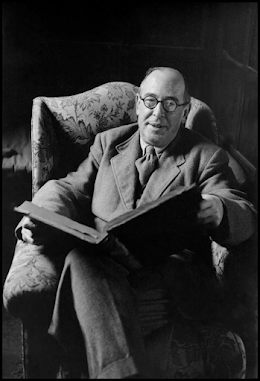
"Perhaps to our surprise, this third Lewis, the medievalist, emerges in the 1962 list that he shared with The Christian Century. When Lewis replied to the editors, he mentioned ten books that shaped his sense of vocation and his philosophy of life, some of which we would expect: 1) George MacDonald’s Phantastes; 2) G.K. Chesterton’s Everlasting Man; 3) Virgil’s Aeneid; 4) The Temple, by George Herbert; 5) William Wordsworth’s Prelude; 6) Rudolf Otto’s The Idea of the Holy; 7) Boethius’s Consolation of Philosophy; 8) The Life of Samuel Johnson, by James Boswell; 9) Descent into Hell, by Charles Williams; and 10) Arthur James Balfour, Theism and Humanism. Some of these books, even if they have been largely forgotten by us, make sense in light of Lewis’s interest in apologetics. ..."
The essay is an adaptation of the introductory chapter of The Medieval Mind of C.S. Lewis: How the Great Book Shaped a Great Mind.
You can read the full essay here.

