Monday, January 16, 2006

Chesterton on Shaw & Spelling

This excerpt from Chesterton's George Bernard Shaw may be interesting to you after reading the essay Nick found, Hilaire Belloc's On Spelling.
... Mr. Shaw has found himself, led by the same mad imp of modernity, on the side of the people who want to have phonetic spelling. The people who want phonetic spelling generally depress the world with tireless and tasteless explanations of how much easier it would be for children or foreign bagmen if "height" were spelt "hite." Now children would curse spelling whatever it was, and we are not going to permit foreign bagmen to improve Shakespeare. Bernard Shaw charged along quite a different line; he urged that Shakespeare himself believed in phonetic spelling, since he spelt his own name in six different ways. According to Shaw, phonetic spelling is merely a return to the freedom and flexibility of Elizabethan literature. That, again, is exactly the kind of blow the old speller does not expect. As a matter of fact there is an answer to both the ingenuities I have quoted. When women have fought in revolutions they have generally shown that it was not natural to them, by their hysterical cruelty and insolence; it was the men who fought in the Revolution; it was the women who tortured the prisoners and mutilated the dead. And because Shakespeare could sing better than he could spell, it does not follow that his spelling and ours ought to be abruptly altered by a race that has lost all instinct for singing. But I do not wish to discuss these points; I only quote them as examples of the startling ability which really brought Shaw to the front; the ability to brighten even our modern movements with original and suggestive thoughts.

Belloc in Expression

Though he is overshadowed (sometimes, perhaps unfairly) by his enormous friend G.K. Chesterton, Hilaire Belloc was nonetheless capable of speaking with force, candour and good humour when the situation called for it. We have seen a good example of this in the essay to which I linked yesterday. I offer today two more examples, though smaller in scope.

Belloc, as most of you will hopefully be aware, was one of few politically-minded authors of his time to actually hold office. Contemporaries like H.G. Wells and Jack London ran - and lost.

Belloc ran for the House of Commons in 1906, and, though he eventually won, he had to overcome his share of intolerance, both with regard to his actual politics and to his religion.

On the occasion of his forst campaign speech, Belloc took to the stage with a rosary in his hands and an angry stare, the piercing gimlet eyes we have so often seen in his pictures sweeping across the audience like machine gun fire. Saith he, "gentlemen, I am a Catholic. As far as possible I go to mass every day... As far as possible, I kneel down and tell these beads every day. If you reject me on account of my religion, I shall thank God that He has spared me the indignity of being your representative."

Though this pronouncement is demonstrative of the righteous thunder that Belloc could bring down upon the unwary, he was also archly aware of the foibles of his particular lifestyle. He once famously advised that a young writer should "concentrate on one subject. Let him, when he is twenty, write about the earthworm. Let him continue for forty years to write of nothing but the earthworm. When he is sixty, pilgrims will make a hollow path with their feet to the door of the world's great authority on the earthworm. They will knock at his door and humbly beg to be allowed to see the Master of the Earthworm."

Finally, we can turn to his ingenuity with light verse. Chesterton has remarked in his Autobiography upon Belloc's production of the only real battle song for social movements. It was "real," Chesterton opined, because it actually had some elements of battle and strategy to it. While Belloc's counterparts relied on bland appeals to the sun rising, or the approach of dawn, or other various inevitabilities, Belloc... well, let's let Chesterton tell it:
And then Belloc wrote a poem called "The Rebel," and nobody noticed the interesting point about it. It is a very violent and bitter poem; it would be much too revolutionary for most of the revolutionists; even those with red ties would blush, and those with pale green ties would turn pale and green with sickness, at such threats against the rich as break out here--"and hack their horses at the knees and hew to death their timber trees," and the very fine ending, "and all these things I mean to do; for fear perhaps my little son should break his hands as I have done."

That is not a Song Before Sunrise. That is an attack before sunrise. But the peculiar point I wish to note here, appears in the previous verse about the actual nature of the attack. It is the only revolutionary poem I ever read, that suggested that there was any plan for making any attack. The first two lines of the verse run: "When we shall find them where they stand, a mile of men on either hand?" The Comrades of the Dawn always seemed to be marching in column, and singing. They never seemed to have heard of deploying; into the long line that faces the foe for battle. The next two lines are: "I mean to charge from right away, and force the flanks of their array." Whoever heard of the Comrades of the Dawn having so complicated an idea as that of turning the enemy's flank? Then comes the encirclement:

And press them inward from the plains
And drive them clamouring down the lanes,
And gallop and harry and have them down,
And carry the gates and hold the town.

The Pursuit; and then the Holding of the Bridgehead.

Now that is the only Song of the Class War I ever read that has the haziest notion of what a war would be like. In this wild lyric, full of vindictive violence and destruction, there is also in quite swift lyrical form a perfectly clear tactical plan and military map; a definite description of how men may storm a fortress, if it has to be stormed. The violence of this democratic, though doubtless dramatic, utterance goes far beyond anything that any Communist will reach in a hundred years. But it involves also the real character of battle; and a battle, like every human work, is at once designed in its beginning and doubtful in its end. Now the Comrades of the Dawn already annoyed me; because their revolution was wildly undesigned in its beginning, but had no doubt about its end. Just like Imperialism; and the South African War.
So turn a thought to Hilaire Belloc in your idle moments, if you've the mind. He is worth a look.

Saturday, January 14, 2006

Belloc in the New Statesman

The upcoming issue of the New Statesman (Jan. 16, 2006) will feature a reprint of Hilaire Belloc's 1930 essay, "On Spelling," as a part of their "Backward Glance" series. An excerpt follows:
Spelling is a great breeder of hatred among the nations and of divisions, misapprehensions, wars - or as our fathers more splendidly put it (to a roll of drums) "Warres"; as also of Dissencyons and Broils. Here myself I confess to the weakness; to see "labour" spelt "labor" makes me see red; and the more openly we admit it the better for international and domestic prose.

Now that this word "labor" should be so abhorrent to the intimate taste of the English mind is a very good reply to the pedants who will defend spelling as a reminder of the origin of words. "Labor" is right. "Labour" is a twisted thing, coming round by way of a dead French usage. You may say, of course, if you like, that even so, it teaches you a little history and that at least such spelling reminds you that the gentry were French before they were English. But if you say this you lie; for it teaches people nothing of the sort, and such few people as hear this truth about the English gentry only fall into a passion and disbelieve it.

Again, who when he comes across a little word "ink" considers that imperial liquid which only the Basileus on his Constantinopolitan throne could use for his most awful signature? If there is one word the spelling of which ought to teach every child the whole story of Europe and of the great Byzantine centre thereof it is the little word "ink" - and it teaches nothing at all. Neither, for that matter, does Constantinopolitan, hard as it is to spell.

No, all that talk of spelling teaching one the past of words and things is nonsense. If there was any sense in it we should spell the Canon of a Cathedral after the same way in which we spell a gun. They are the same word; and yet I suppose there is not one man in 20,000 who would not ridicule the spelling of the Piece with one "n" and of the Ecclesiastic with two. For my part, if I had to give the extra "n" to either I should give it to the cleric, as one of God’s creatures and a hierarch and therefore infinitely nobler than a piece of brute metal.
You can read the rest of the essay here, although only once per day owing to the New Statesman's non-subscriber access policy. My advice to you would be to save the article to Notepad, or some such thing, that you might enjoy it in future times. It does not appear anywhere else on the Internet, as far as I can find.

Friday, January 13, 2006

Chesterton in Rolling Stone

G.K. Chesterton is quoted (sort of) in a new article about Neil Young in Rolling Stone magazine:

"[Neil Young] receives songs as much as he writes them. The exchange is a mystical one, and mysticism, as G.K. Chesterton somewhere remarks, keeps people and cultures sane. Logic, too emphatically embraced, is what undoes the mind."

link to article

Pearce: Chesterton Was Wrong

Carl Olson recently interviewed Joseph Pearce about his new book Flowers of Heaven: One Thousand Years of Christian Verse (IgnatiusInsight.com, Jan 13, 2006):
IgnatiusInsight.com: One of your favorite authors, G.K. Chesterton, was frank about his dislike for modern poetry, including the work of T.S. Eliot. What do you think of Chesterton's assessment of Eliot's poetry?

Joseph Pearce: He was wrong! Frankly, I don’t believe Chesterton understood Eliot’s poetry, though he admired Eliot’s play, Murder in the Cathedral. Like many others of his generation, Chesterton disliked the novelty of Eliot’s avant garde approach to meter and rhyme. I like to think that Chesterton would have grown to admire Eliot if he had lived longer. Eliot’s Four Quartets, a deeply mystical and religious work and arguably his masterpiece, was not published until several years after Chesterton’s death.
Click here for the entire IgnatiusInsight.com interview with Joseph Pearce.

Thursday, January 12, 2006

Nate Blake on Trickle-Down Philosophy

I would like to inform, as a member of the Nate Blake Fan Club, that Nathanael Blake has another fine article up at the Oregon State Daily Barometer; Muggeridge made the cut this time:
How many intellectuals have loudly proclaimed that there is no real right and wrong, only to be appalled when people behave as if there is no right and wrong?

Once loosed, ideas originally proposed as personal rationalization or as the intellectual baubles of the arrogant cognoscenti will not be easily leashed again. Malcolm Muggeridge acerbically commented, "Previous civilizations have been overthrown from without by the incursions of barbarian hordes; ours has dreamed up its own dissolution in the minds of its own intellectual elites."

Ideas that become part of the cultural background will relentlessly seek their logical conclusion, regardless of whether their proponents have bothered to think them out. Most people, of course, largely accept the presumptions of their environment uncritically; we might call the percolation of ideas from the intellectuals to the masses "trickle-down philosophy."

CR: Fantasy Special Issue

The latest Chesterton Review is a special edition on fantasy literature. If the faerie writings of Tolkien, Lewis, MacDonald, or even Rowling interest you, then get your eyes on the 300 pages of this issue.

The end this edition's Letters section mentions a new Chesterton web resource, G.K. Chesterton ir Lietuva - Krikščioniškosios vertybės ir kultūra šiandien. For the reader who prefers English to Lithuanian you are in luck; the web site has an English resources section. Presently this includes an article by Stratford Caldecott - Evangelising the Imagination through Story: J.R.R. Tolkien and C.S. Lewis.

Wednesday, January 11, 2006

GKC's Long Reach

A blogger from India invokes the big man's name to attack secularism, though it appears to be a re-print from an article in The Hindu ("India's National Newspaper"), who may have been re-printing it from The Guardian. It's hard to say, but I'm always interested to see GKC get mentioned on the other side of the Euphrates.

"By all means, let's have a serious debate about religious belief, one of the most complex and fascinating phenomena on the planet, but the suspicion is that it's not what this chorus wants. Behind unsubstantiated assertions, sweeping generalisations and random anecdotal evidence, there's the unmistakable whiff of panic; they fear religion is on the march again. There's an aggrieved frustration that they've been short-changed by history; we were supposed to be all atheist rationalists by now. Secularisation was supposed to be an inextricable part of progress. Even more grating, what secularisation there has been is accompanied by the growth of weird irrationalities from crystals to ley lines. As G.K. Chesterton pointed out, the problem when people don't believe in God is not that they believe nothing, it is that they believe anything."

Link.

Tuesday, January 10, 2006

The Old Way to RSS Feed

In October of 1927 when the Shaws had moved into a new apartment in Westminster, George Bernard immediately befriended the young assistant in the foyer bookshop and assigned her to keep him informed of any new articles by G.K. Chesterton. [Michael Holroyd, Bernard Shaw, v. III, p. 139]

Monday, January 09, 2006

Reunification?

There have been various rumblings lately (in the form of a cordial declaration on the part of the Eastern Church about being "open to talks" and of some more concrete pronouncements from leaders of the Traditional Anglican Community) that the beginnings of a reunification could be at hand.

This is a wonderful time to hear about it, of course; we're just coming off of Christmas (or going into it, for our Julian readers), and Benedict XVI's upcoming encyclical, Deus est Caritas, could prove just the catalyst to reinvigorate the love of man and spirit of reconciliation that are meant to be manifestations of the love of God, but so often and so tragically fall by the wayside.

Now, there is clearly a sort of general optimism about all of this that is, I would hope, infectious. Things are at a very early and uncertain stage, but all things, as we know, are possible with His stewardship. The concept of a reconciliation - particularly with the Eastern Church - is a serious matter, of course; a matter over which I exert no control and in which I have no great stake. I am thrilled nonetheless.

It is in this buzz of possibility that I recalled one of Chesterton's better - and snarkier - editorial replies. It is a delightful and browpeating piece of verse, penned at the height of the debate over the Welsh Disestablishment Bill. It could almost be belted out in a tavern were it not so esoteric. It is as follows:

Antichrist -or- The Reunion of Christendom

'A Bill which has shocked the conscience of every Christian community in Europe.' -- Mr. F.E. Smith, on the Welsh Disestablishment Bill.
Are they clinging to their crosses,
F.E. Smith,
Where the Breton boat-fleet tosses,
Are they, Smith?
Do they, fasting, trembling, bleeding,
Wait the news from this our city?
Groaning 'That's the Second Reading!'
Hissing 'There is still Committee!'
If the voice of Cecil falters,
If McKenna's point has pith,
Do they tremble for their altars?
Do they, Smith?

Russian peasants round their pope
Huddled, Smith,
Hear about it all, I hope,
Don't they, Smith?
In the mountain hamlets clothing
Peaks beyond Caucasian pales,
Where Establishment means nothing
And they never heard of Wales,
Do they read it all in Hansard
With a crib to read it with --
'Welsh Tithes: Dr Clifford Answered.'
Really, Smith?

In the lands where Christians were,
F.E. Smith,
In the little lands laid bare,
Smith, O Smith!
Where the Turkish bands are busy
And the Tory name is blessed
Since they hailed the Cross of Dizzy
On the banners from the West!
Men don't think it half so hard if
Islam burns their kin and kith,
Since a curate lives in Cardiff
Saved by Smith.

It would greatly, I must own,
Soothe me, Smith!
If you left this theme alone,
Holy Smith!
For your legal cause or civil
You fight well and get your fee;
For your God or dream or devil
You will answer, not to me.
Talk about the pews and steeples
And the Cash that goes therewith!
But the souls of Christian peoples . . .
Chuck it, Smith!
It all sounds rather silly to us now, of course. We must remember that it took guts to stand up to someone as powerful as F.E. Smith, later Lord Birkenhead, at the height of a furor that was one of the sole interests of the nation. We must make similar allowances for the gallons of ink spilled in the name of the Superman over the years, but that is a story for another time.

Until such time as I can produce a light verse sketch of Pope Urban II and the Emperor Romanus shaking hands warmly in St. Peter's square without it seeming sordid, it would be worthwhile to keep the efforts of the various ecclesiastic diplomats in our thoughts. As with all things, we should watch and pray.

Saturday, January 07, 2006

Continuing on the theme of Epiphany

I'd like to thank Joe and Eric for so graciously inviting me to contribute to this project. I've been a great fan of theirs for some time, and it's good to know that my efforts at self-promotion are finally bearing fruit.

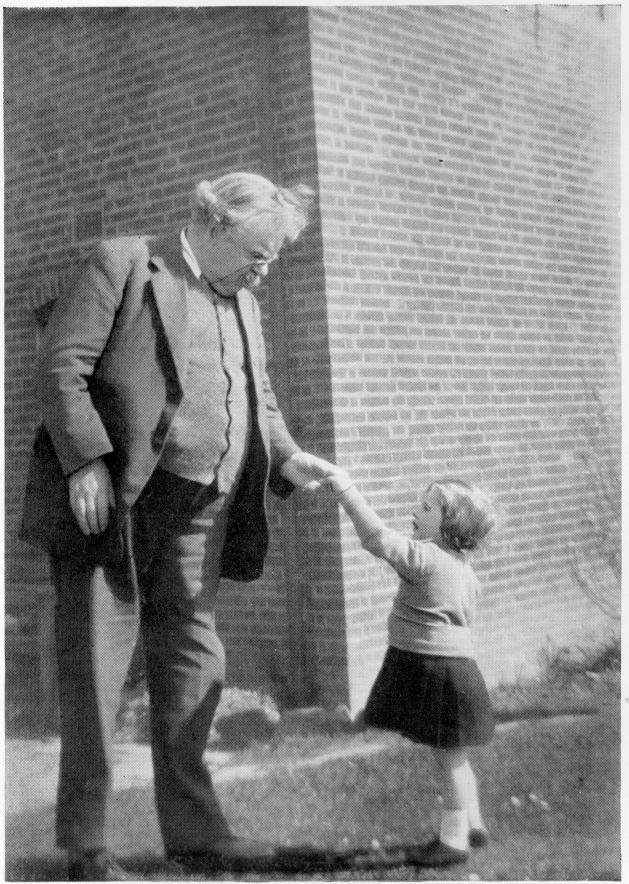
My post for today was inspired in part by yesterday's feast, the poem Joe posted, and something else. I came upon this, my favourite picture of Chesterton, while searching for something earlier today, and it struck me as being a fitting illustration, perhaps, of the spirit of the Epiphany.

In the events commemorated at Epiphany, we can see much that is symbolic as well as literal. On a basic level, there is the arrival of the three magi and their subsequent adoration of the infant Christ, the baptism of the adult Christ in the river Jordan, and the wedding miracle at Cana.

In the first, we see the initial turning of the Pagan world towards the Lord, though they know it not. They come bearing gifts, and guided by mystery. It is what one might call the culmination - or almost a purgative vindication - of the moral, philosophic and aesthetic efforts of the Pagans. They are guided by the great Star of David into the House of Israel at last; towards what St. Leo the Great called Israelitica dignitas. The old world looks down upon the rising son and offers up riches in supplication.

In the second, we witness the breathtaking - we could say scandalous - entry of Jesus Christ into the contemporary public eye. He stands before John the Baptist and insists upon the baptism of repentence. There is a hesitancy to John's eventual agreement to do this thing, but he is compelled to. Then the Dove of the Holy Spirit descends upon Jesus, and He is proclaimed as the Son. He receives the gift of baptism, though He does not need it; just as He received the sweet spices and gold of the magi, though they were without value to one such as He. A gift from John of the Levites - the Israelites turn towards the Lord.

In the third, He attends a wedding in Cana. It is important to see this as a reflection of the social, familial nature of Christendom; indeed, Jesus attends the wedding with His Mother. In what is His first miracle, Christ turns water into wine, the party's supplies of wine having long since been exhausted by the jubilant guests. It is thought by some that the groom intentionally saved the best wine for last, so delicious did it prove. What has this wrought, then? We can see the importance of the Mother Mary to the Lord; an importance we would do well to remember. Christ brings forth wine, the drink that fires the emotions and enflames the spirit, and at a wedding no less. He has reached into the heart of fellowship, both romantic and filial, and kicked it up a notch. And, though it may seem as though the point is being belaboured, the wine that flows is better than any that had e'er come before. The New Love burned like the sun in a room of candles.

The important consideration that joins these narratives - and the reason for the use of the image above - is that the boons of these stories run both ways. The magi brought gifts; John the Levite gave a baptism; the wedding gave Christ the opportunity to step fully into the world in His most glorious aspect. All of this, indeed, without any of the benefactors being fully aware of the significance of their actions. But, for all of this, Christ grants an even greater gift to each in return. He is the respite at the end of the journey; He is the vindication of a life's work; He is, if we may be so glib, the life of the party.

==

"If I can put one touch of rosy sunset into the life of any man or woman, I shall feel that I have worked with God." - G.K. Chesterton

Friday, January 06, 2006

The Wise Men

JANUARY 6th
THE FEAST OF THE EPIPHANY

THE WISE MEN


STEP softly, under snow or rain,
To find the place where men can pray;
The way is all so very plain,
That we may lose the way.

Oh, we have learnt to peer and pore
On tortured puzzles from our youth.
We know all labyrinthine lore,
We are the three Wise Men of yore,
And we know all things but the truth.

Go humbly . . . it has hailed and snowed . . .
With voices low and lanterns lit,
So very simple is the road,
That we may stray from it.

The world grows terrible and white,
And blinding white the breaking day,
We walk bewildered in the light,
For something is too large for sight,
And something much too plain to say.

The Child that was ere worlds begun
( . . . We need but walk a little way . . .
We need but see a latch undone . . . )
The Child that played with moon and sun
Is playing with a little hay.

The house from which the heavens are fed,
The old strange house that is our own,
Where tricks of words are never said,
And Mercy is as plain as bread,
And Honour is as hard as stone,

Go humbly; humble are the skies,
And low and large and fierce the Star,
So very near the Manger lies,
That we may travel far.

Hark ! Laughter like a lion wakes
To roar to the resounding plain,
And the whole heaven shouts and shakes,
For God Himself is born again
And we are little children walking
Through the snow and rain.

Daily News
(GKC reprinted in Chesterton Day by Day)

Motivational Poster

Every office needs a good motivational poster:


Thanks to Robert Pearson at New Victorian for pointing out the Motivator.

Thursday, January 05, 2006

New Yorker Cites GKC

I don't subscribe to The New Yorker. Its bigoted secularism is too much, but it has some fine writing, so I read it when a friend of mine gives me his past issues. I just got the November 21, 2005 issue, in which Adam Gopnik gives C.S. Lewis a rather ungenerous and slashing treatment. If you want to read it, go here: Link. I'm more interested, however, in the following statement from the beginning:

Praise a good writer too single-mindedly for too obviously ideological reasons for too long, and pretty soon you have him all to yourself. The same thing has happened to G. K. Chesterton: the enthusiasts are so busy chortling and snickering as their man throws another right hook at the rationalist that they don’t notice that the rationalist isn’t actually down on the canvas; he and his friends have long since left the building.

I'm not sure I fully understand the passage. Gopnik appears to be saying that people don't listen to GKC's defenders anymore because they unequivocally cheer for the man. It's an odd assessment. GKC defenders cheer for him (i) because he deserves it, and (ii) practically no one cheered for him for nearly fifty years after his death. The great man nearly fell off the literary map. I'm glad to see that Gopnik thinks the Chestertonians have made a big enough impact to push GKC from the forgotten, through the spotlight, to irrelevancy, but Gopnik is the first person I've ever heard make that complaint.

Beerbohm: Sundaram v. Epstein

Sundaram appears to think and write just like Joseph Epstein. Surely this will be the biggest plagiarism scandal since Stephen Ambrose.

Beerbohm was primarily and always an ironist, a comedian, an amused observer standing on the sidelines with a smile and a glass of wine in his hand. G.K. Chesterton said of him that "he does not indulge in the base idolatry of believing in himself."
Joseph Epstein. "The Beerbohm Cult" in The Weekly Standard, 11/11/2002, LINK

Beerbohm was primarily and always an ironist, a comedian, an amused observer standing on the sidelines with a smile and a glass of wine in his hand. G K Chesterton rightly observed that 'he does not indulge in the base idolatry of believing in himself'.
V. Sundaram. "The incomparable Max Beerbohm" in India's News Today, 1/4/2006, LINK

More on Beerbohm

V. Sundaram wrote an introduction to Max Beerbohm yesterday in India's News Today. A couple clippings:
As indeed in every other sphere of life, even in the world of journalism and mass media, we only have paid mercenaries to do allotted tasks in a routine manner. Most of the journalists today are more bureaucratic, soulless and gutless than most of the bureaucrats. In this enervating and asphyxiating atmosphere, I cannot help recalling a great English journalist like Max Beerbohm (1872-1956) who was also a talented novelist, caricaturist, short story writer, versifier, satirist, parodist, essayist and theatre-critic. Many of his journalistic pieces written between 1895 and 1925 can be read with interest and enthusiasm even today. There is nothing stale about them. They are very humane and contemporary.

...

Beerbohm was primarily and always an ironist, a comedian, an amused observer standing on the sidelines with a smile and a glass of wine in his hand. G K Chesterton rightly observed that 'he does not indulge in the base idolatry of believing in himself'.

Wednesday, January 04, 2006

GK New Year Quote

I found this on a blog. I can't vouch that it's accurate (and GKC is probably the most misquoted writer in history), but it rings a bell, and it's a great quote either way:

" The object of a new year is not that we should have a new year. It is that we should have a new soul."-G. K. Chesterton

Link.

Welcome to Nick Milne

Nick Milne (a.k.a. Furor) of A Gentle Fuss and Evening Isles Fantastical will soon be posting his contributions here at Chesterton and Friends.

Welcome!

Tuesday, January 03, 2006

Mr. Max Beerbohm

Oliver Kamm writes about Max Beerbohm in his European culture and humor article (published today at The Times Online):
[Beerbohm's] caricatures were affectionate but not obsequious representations of the great and the good. He was, said The Times, the greatest of English comic artists. His genius can be seen in, among many others, his cartoon of H. G. Wells, with whom he was friendly but whose utopianism he was repelled by. The cartoon shows a wide-eyed Wells conjuring up “the darling future”, a severe-looking bespectacled lady clutching a scientific instrument in one arm and an even more severe-looking baby in the other.

Beerbohm had little interest in politics but he had a social conscience. While strongly supporting the war effort in two world wars, he was opposed to the Boer War and drew a series of cartoons about it. He lent his name shortly before his death to a petition opposing atomic weapons.

Above all, Beerbohm’s sparkling Zuleika Dobson shows the devastating effects of single-mindedness. Beauty, in the form of the eponymous heroine, descends on Oxford and wreaks havoc among the aesthetes of the undergraduate population, who collectively commit suicide. The satire here is most particularly on a Romanticism represented by a brooding young aristocrat. It might have foreshadowed the selfabsorbed European culture that two decades later could not perceive till too late the deadliness of movements that seemed to promise a real historical dynamic.
You can find some of Beerbohm's drawings online here and here.

G.K. Chesterton wrote in All Things Considered that Max Beerbohm "has every merit except democracy".

Monday, January 02, 2006

Unless

THE object of a New Year is not that we should have a new year. It is that we should have a new soul and a new nose; new feet, a new backbone, new ears, and new eyes. Unless a particular man made New Year resolutions, he would make no resolutions. Unless a man starts afresh about things, he will certainly do nothing effective. Unless a man starts on the strange assumption that he has never existed before, it is quite certain that he will never exist afterwards. Unless a man be born again, he shall by no means enter into the Kingdom of Heaven.

-- G.K. Chesterton, Daily News

(source: Chesterton Day by Day: New Year's Day)