Thursday, July 11, 2013

A Catholic Reading List


Father John McCloskey over at Catholicity.com has compiled A Catholic Lifetime Reading Plan. He is not alone in having done this - I even remember a book by that title by Father Hardon a few years back.

There are a number of interesting titles on Father McCloskey's list - including ones by some of our favorite authors here.

Chesterton shows up with four titles: Everlasting Man, Orthodoxy, St. Thomas Aquinas, and St. Francis of Assisi. I can't argue with any of those choices. I wonder if an essay collection could be added - but which one? (Maybe In Defense of Sanity, selected by Ahlquist, Mackey, and Pearce?)

If I read the list correctly, by the way, Chesterton has the most individual titles listed. However, Father does say "Opera Omnia" (the complete works) for Popes Benedict XVI and John Paul II. 

Belloc shows up with three titles: The Great Heresies, How The Reformation Happened, and Survivals and New Arrivals, Alas, no room for his poetry!

C. S. Lewis also has three titles: The Problem of Pain, Mere Christianity, and The Screwtape Letters. No Narnia. Interestingly, Fathers has a typo here, calling the first book the Problem with Pain! And, of course, Lewis' good friend, J. R. R. Tolkien, makes the list with The Lord of Rings. Since that was published as a trilogy, maybe we should count that as three titles. 

Among the other authors associated with this blog who made the list are Christopher Dawson, Christianity and European Culture; Monsignor Ronald Knox, Enthusiasm; and Malcolm Muggeridge, Something Beautiful for God ( a lovely book about Mother Teresa).

There are other favorite of mine:

Dorothy Day – The Long Loneliness
Scott Hahn – Rome Sweet Home
Pope John XXIII – Journal of a Soul
Thomas Merton – Seven Storey Mountain
Gerard Manley Hopkins (poetry)
Confessions of St. Augustine

There are plenty of other titles I'd like to read. I think maybe the list could have more poetry (Date made the list, by the way.) And drama - though of course plays are more meant to be watched than read (ah, but something like A Man for All Seasons is a wonderful read.)

Now, what should I read next?

Sunday, June 30, 2013

Our St. Thomas More Moment


"Sir Thomas More is more important at this moment than at any moment since his death, but he is not quite so important as he will be in a hundred years time."  - G. K. Chesterton, in 1919

At our school we've added classic/significant movies to our English summer reading lists to help promote cultural literacy. For the seniors, who are taking what's basically a British literature course, the movie is A Man for All Seasons.

I've always loved that movie. I've also had a fondness for St. Thomas More for his faith and his courage, but also for the fact that he was a Secular Franciscan.

He's been on my mind lately.

More died because he refused to go along with King Henry's desired to challenge the Church over it marriage rules. Henry wanted the pope to grant him an annulment from his first marriage - never mind that the pope had given his special permission to marry Catherine of Aragon in the first place - but the pope refused. So Henry broke from the Church, dissolved the marriage, and married Anne Boleyn.

More sided with the Church, and quit his government post. But he also did not say anything, hoping that as long as he did not publicly states his views he and his family would remain safe. As the movie makes clear, he did not even tell his family his views so that they could not be called upon to testify.

But everyone knew where he stood.

Henry then got a law approved that required people to swear that they supported the King - and thus More's silence could no longer protect him.

I was thinking about More because we are faced with another marriage issue - and one in which people of faith are increasingly being forced to go along or face persecution.

The current issue is, of course, homosexual so-called marriage. The U.S. Supreme Court decisions last week are just another step in the process toward legal recognition of such marriages - which are allowed in a number of states (including my own).

We've received all sorts of assurances that churches will not be forced to perform such wedding ceremonies, and that people will not be forced to go against their religious beliefs when it comes to such marriages.

But it's already begun to happen - and it will increase.

People who defend traditional marriage can't do so at work. If they speak out, they can be fired. Some  had hoped they could simply keep their mouths shut, but in some government agencies they are now required to at least pretend they support such marriages - just as Henry required peopel to take an oth in support of his marriage and defiance of the Church. Some government workers who perform wedding have already been forced to quit their jobs because  they will be required to perform such weddings.

Meanwhile, photographers, florists, inn keepers, and more have been sued if they have declined to provide their services for marriages and couple they don't recognize on moral grounds.

There are more and more stories of people facing persecution because they do not go along with the homosexual agenda. Like More, they are increasingly not protected by silence.

We are faced with the kind of choice More faced. He provides an important model for us. We too may be called upon to pay a price for upholding our beliefs and our Church (though, we don't face death for doing so, at least not yet).

It seems that Chesterton's 1919 prediction is indeed coming true a century later.

Thursday, June 13, 2013

C. S. Lewis Conference Next Week


This November 22 will mark the 50th anniversary of the death of C. S. Lewis.

To mark the anniversary The C. S. Lewis Foundation has scheduled the C. S. Lewis Summer Conference for June 21-23 in San Diego at the University of San Diego.

The theme is "Living Legacy: The Vision, Voice & Vocation of C. S. Lewis."

Among the scheduled speakers is Peter Kreeft - who's also scheduled for the Chesterton Conference in Massachusetts August 1-3.

The breakout sessions include Doing What the Inklings Did, Between Heaven and Hell, Did C. S. Lewis Get it Wrong, Lewis and Women, the Art of Prayer, and The Screwtape Letter: C. S. Lewis' Other Autobiography.

Sound interesting. For West Coast folk who can't make it to the Chesterton Conference, this might be a reasonable alternative.

For more info go here.

Saturday, June 08, 2013

Chesterton is indeed "The Complete Thinker"


I've just read The Complete Thinker: The Marvelous Mind of G. K. Chesterton by Dale Ahlquist.

I'd recommend that fans of Chesterton do so too - and not just because buying a copy might put a few bucks in Dale's pocket (though he deserves it).

The book is a survey of Chesterton's thinking on any number of issues and topics. Given the range of Chesterton's writings the book needed an appendix to try to fit everything in - and I suspect Dale could have added another appendix or two if he'd wanted to.

Chesterton was noted for inserting himself and his thought into everything he was writing, so it's no surprise that amidst the exploration of GKC's thoughts, Ahquist also managed to sneak in bits of his own Chesterton-colored observations about contemporary issues.

Given the volume of Chesterton's writings and the range of topics he covered, the book is by necessity only a taste of Chesterton. But it might just inspire readers to explore him more seriously and more in depth. Although I have been reading Chesterton fairly regularly for the past 20 years, I learned a few things from this book - and made some connections I hadn't before.

I found reading the book like reading Chesterton - at least for me. Some people can guzzle his writing. I find I need to sip and savor. So it takes me a while to get through any of Chesterton's books. It took me months to finish Ahlquist's book. Better minds would likely be able to get through it much quicker.

But whatever your approach, I do recommend this book. Even if you are not a fan of Chesterton, I think you'll find this book thought-provoking and eye-opening.

So buy it, and keep Dale's bank account solvent.

Thursday, May 30, 2013

Happy Birthday Chesterton


Happy Birthday (yesterday)!
 
“Children are grateful when Santa Claus puts in their stockings gifts of toys or sweets. Could I not be grateful to Santa Claus when he put in my stockings the gift of two miraculous legs? We thank people for birthday presents of cigars and slippers. Can I thank no one
for the birthday present of birth?”
 - Orthodoxy

Monday, May 27, 2013

Chesterton shows up in Canada (faith doesn't)


There was a piece in a Canadian newspaper about people in Canada leaving organized religion, and especially Christianity. Some folks are going to other religions - Islam has doubled its numbers, for example. But a significant part of the population surveyed now identify themselves as having no religious affiliation.

The writer - Martin Wissmath - notes that the decision to leave faith and be unaffiliated has an effect on society and culture.

I think he's right, but it's not limited to Canada. Go to the movies, read a secular publication or book, watch television shows and news, or look at the decisions of government in the U.S. and Europe and you see signs of the waning of religion and desertion of Christian and moral values. Heck, a lesbian coming of age story involving scenes of graphic sex between a minor and an adult just won at Cannes.

Wissmath also points out that as people leave faith, it's not due to passion or thought.

"It's not so much an examined rejection of faith in favour of some other philosophical worldview, as a passive, fading, giving up. They just don't care anymore."

In grumpier moments I think it's not so much that people don't care, it's just that they don't care about anything that interferes with their own self fulfillment and gratification. They care about what feels good for themselves. Other things that require work - practicing religion, growing intellectually, being an informed citizen, etc. - are deemed not worth the effort.

Wissmath concludes by citing two great writers, one of them being, of course, G.K. Chesterton.

Since at least the 19th century Christianity has been waning in North America and Europe. With the exception of some years of resurgence, such as the 1950s, it's been a very gradual ebbing of the tide: the "melancholy, long, withdrawing roar," of the Sea of Faith that the poet Matthew Arnold predicted almost 250 years ago. But the shore of post-Christianity is emerging faster than ever.

The words of the early 20th century English journalist G.K. Chesterton come to mind as an apt description of the situation, even timelier now. He wrote, "the Christian ideal has not been tried and found wanting; it has been found difficult, and left untried."

Indeed.

Friday, May 17, 2013

The Not Quite Great Gatsby


I went with some students and fellow teachers to see the new film version of The Great Gatsby.

There are some things to praise about the film, some to criticize. There are good moments and performances, but not enough to make it a great film or for me to heartily endorse it. In too much of it, flash and style take precedence over substance. And I'm not happy with some of the ways it strays from the novel.

But I began to wonder what Chesterton made of the novel when it came out.

I haven't found any comments by Chesterton about the book or even about F. Scott Fitzgerald yet - though they may be there (wiser and better-read Chestertonians may know of some).

But I have seen references to Fitzgerald - a fallen Catholic - being familiar with Chesterton's writings. There's even a post on this blog that predates my joining the team:

A collection of the letters of F. Scott Fitzgerald shows a number of references to Chesterton as the writer struggled in 1917 with his unsuccessful first draft of This Side of Paradise. He wrote Edmund Wilson that the novel "shows traces of Chesterton," and that he put "Barrie and Chesterton above anyone except Wells." Fitzgerald complained to biographer Shane Leslie of "gloomy, half-twilight realism," asking "Where are the novels of five years ago?" Fitzgerald included Chesterton's Manalive on his approved novel list, and also confided to Leslie that he was planning to quote some Chesterton gibberish on his new novel's title page ("Highty-ighty, tiddly-ighty, tiddley-ighty, ow!" from The Club of Queer Trades). [A Life in Letters, Edited by Mat-thew Bruccoli, Scribner's 1994, pp. 12-20] - Eric Scheske (July 28, 2005)

I'll keep searching,


.

Friday, May 10, 2013

A Benghazi Thought


“Men are ruled, at this minute by the clock, by liars who refuse them news, and by fools who cannot govern.” - GKC

I have been thinking about this week's Benghazi testimony. People died. Requests for help were not honored.

Meanwhile, Obama administration officials testified and gave speeches that were false. It's going to be hard to prove that people deliberately lied, but it's clear that the "truth" was shaped by the administration to suit its political ends.

Will anyone face charges? I seriously doubt it.

Will someone lose his or her job? Maybe - though some folks who have already left their jobs may serve as handy scapegoats.

Will political futures be affected? Perhaps. I think the odds of Hillary Clinton running for President in 2016 just grew longer. Of course, the average American voters - people of severely shallow thought and limited memory - may not even recall hearing about Benghazi by the time the 2016 primaries roll around. Heck, many will likely have forgotten whatchamacallit by the All Star break.

I'm not a supporter of the death penalty, but I'm tempted to think Chesterton may have had it right: “It is terrible to contemplate how few politicians are hanged. ”

Thursday, May 02, 2013

Live Action does it again


Live Action continues to expose the abortion industry. They view themselves as investigative journalists. I wonder how Chesterton, as a journalist, would have viewed their actions. He certainly would have agreed with their aims.

Thursday, April 25, 2013

On tap


“No animal ever invented anything as bad as drunkenness – or as good as drink.” G.K. Chesterton


Tonight, I decided to have a beer. I don't know why; just in the mood.

As I sipped my Guinness Stout, I wondered if that was one of the beers Chesterton drank. Perhaps a scholar out there has studied the particular brands he drank. Perhaps a dedicated Chestertonian might then set a goal of drinking a pint of each brand the great one imbibed. I would be happy to volunteer.

Given GKC's distributist ideas, perhaps he preferred locally brewed beverages. Ales and porters of London and its environs? Hmm.

But perhaps he did sample a Guinness. I'll settle for that now.


Saturday, April 20, 2013

A Gosnell reflection


I don't know if late-term abortionist Kermit Gosnell
will end up in Hell,
but I bet he's hoping all those babies who died
won't be helping God to decide.

Friday, April 12, 2013

Today I wore Chesterton


At the Catholic school where I teach, I've been sneaking in Chesterton - essays and poetry in a couple of classes. Just a taste, but at least some of the students have now heard of him.

I've also been wearing him  on dress down days like today. Specifically, I have a Chesterton Academy sweatshirt. People assume it's a tribute just to Chesterton, not that it represents another high school. I don't explain. But I do proclaim.

Chesterton lives! 

Thursday, April 04, 2013

In which I spout heresy


I've read a goodly amount of Chesterton's writings. My tally is no where near the amount the great Dale Ahlquist has read - I suspect he has studied even Chesterton's shopping lists ("Two cigars, three pieces of chalk, brown paper, ...") - but it's more than most people. I credit his biography of St. Francis with helping to save my faith, and I followed that up with such books as his biography of Aquinas, The Everlasting Man, and Orthodoxy, a slew of his essays, and a broad selection of his poetry.

But I had not read many of his Father Brown stories.

I had read a few of the Brown mysteries - the ones that are regularly anthologized - and I enjoyed them.

So this past Christmas I was delighted when youngest daughter gave me a first American edition of The Wisdom of Father Brown that she had found in a used bookstore.

I had a few other things to read first, then I got to this treasure full of anticipation.

With each story I grew more disappointed.

I am a fan of mysteries. I've read almost all the Sherlock Holmes tales, many of the Tony Hillerman Navajo stories, a number of Parker's Spenser books (where I learned a better way to cook pasta!), all the Father Dowling books my local library had, and I even got to interview the incredible (though sadly, now late) Ed Hoch, who's stories I love.

I just didn't think the mysteries in this Father Brown book were particularly good as mystery stories.

Then I got to "The God of the Gongs."

I was more than disappointed. I was offended.

I understand that it was a different time period and that racial names were viewed differently then, but I found the frequent use of "Nigger" jarring. If it had just been that - I've read The Adventures of  Huckleberry Finn - I could have understood the use of that word. But there was also an attitude of racial superiority that came through in various lines about Italians, darker races, and Blacks, and when Father Brown observed, "That negro who has just swaggered out is one of the most dangerous men on earth, for he has the brains of a European, with the instincts of a cannibal," I nearly threw the book down.

I don't think Chesterton was a racist. I think he was a product of his time.

I would not be surprised if such attitudes might be found in some of his other writings - I've only begun to mine the mother lode. But they have literary riches that outweigh such racial slag.

But as for the Father Brown tales ,,,

I'll finish reading the book - it was a gift and I feel obligated - but it may be a while before I'll read any more Father Brown mysteries. I've lost the desire.

Thursday, March 28, 2013

The Priest of Spring

In honor of the Triduum, an essay of Chesterton:

THE PRIEST OF SPRING
The sun has strengthened and the air softened just before Easter Day. But it is a troubled brightness which has a breath not only of novelty but of revolution, There are two great armies of the human intellect who will fight till the end on this vital point, whether Easter is to be congratulated on fitting in with the Spring - or the Spring on fitting in with Easter.

The only two things that can satisfy the soul are a person and a story; and even a story must be about a person. There are indeed very voluptuous appetites and enjoyments in mere abstractions like mathematics, logic, or chess. But these mere pleasures of the mind are like mere pleasures of the body. That is, they are mere pleasures, though they may be gigantic pleasures; they can never by a mere increase of themselves amount to happiness. A man just about to be hanged may enjoy his breakfast; especially if it be his favourite breakfast; and in the same way he may enjoy an argument with the chaplain about heresy, especially if it is his favourite heresy. But whether he can enjoy either of them does not depend on either of them; it depends upon his spiritual attitude towards a subsequent event. And that event is really interesting to the soul; because it is the end of a story and (as some hold) the end of a person.

Now it is this simple truth which, like many others, is too simple for our scientists to see. This is where they go wrong, not only about true religion, but about false religions too; so that their account of mythology is more mythical than the myth itself. I do not confine myself to saying that they are quite incorrect when they state (for instance) that Christ was a legend of dying and reviving vegetation, like Adonis or Persephone. I say that even if Adonis was a god of vegetation, they have got the whole notion of him wrong. Nobody, to begin with, is sufficiently interested in decaying vegetables, as such, to make any particular mystery or disguise about them; and certainly not enough to disguise them under the image of a very handsome young man, which is a vastly more interesting thing. If Adonis was connected with the fall of leaves in autumn and the return of flowers in spring, the process of thought was quite different. It is a process of thought which springs up spontaneously in all children and young artists; it springs up spontaneously in all healthy societies. It is very difficult to explain in a diseased society.

The brain of man is subject to short and strange snatches of sleep. A cloud seals the city of reason or rests upon the sea of imagination; a dream that darkens as much, whether it is a nightmare of atheism or a daydream of idolatry. And just as we have all sprung from sleep with a start and found ourselves saying some sentence that has no meaning, save in the mad tongues of the midnight; so the human mind starts from its trances of stupidity with some complete phrase upon its lips; a complete phrase which is a complete folly. Unfortunately it is not like the dream sentence, generally forgotten in the putting on of boots or the putting in of breakfast. This senseless aphorism, invented when man's mind was asleep, still hangs on his tongue and entangles all his relations to rational and daylight things. All our controversies are confused by certain kinds of phrases which are not merely untrue, but were always unmeaning; which are not merely inapplicable, but were always intrinsically useless. We recognise them wherever a man talks of "the survival of the fittest," meaning only the survival of the survivors; or wherever a man says that the rich "have a stake in the country," as if the poor could not suffer from misgovernment or military defeat; or where a man talks about "going on towards Progress," which only means going on towards going on; or when a man talks about "government by the wise few," as if they could be picked out by their pantaloons. "The wise few" must mean either the few whom the foolish think wise or the very foolish who think themselves wise.

There is one piece of nonsense that modern people still find themselves saying, even after they are more or less awake, by which I am particularly irritated. It arose in the popularised science of the nineteenth century, especially in connection with the study of myths and religions. The fragment of gibberish to which I refer generally takes the form of saying "This god or hero really represents the sun." Or "Apollo killing the Python MEANS that the summer drives out the winter." Or "The King dying in a western battle is a SYMBOL of the sun setting in the west." Now I should really have thought that even the skeptical professors, whose skulls are as shallow as frying-pans, might have reflected that human beings never think or feel like this. Consider what is involved in this supposition. It presumes that primitive man went out for a walk and saw with great interest a big burning spot on the sky. He then said to primitive woman, "My dear, we had better keep this quiet. We mustn't let it get about. The children and the slaves are so very sharp. They might discover the sun any day, unless we are very careful. So we won't call it 'the sun,' but I will draw a picture of a man killing a snake; and whenever I do that you will know what I mean. The sun doesn't look at all like a man killing a snake; so nobody can possibly know. It will be a little secret between us; and while the slaves and the children fancy I am quite excited with a grand tale of a writhing dragon and a wrestling demigod, I shall really MEAN this delicious little discovery, that there is a round yellow disc up in the air." One does not need to know much mythology to know that this is a myth. It is commonly called the Solar Myth.

Quite plainly, of course, the case was just the other way. The god was never a symbol or hieroglyph representing the sun. The sun was a hieroglyph representing the god. Primitive man (with whom my friend Dombey is no doubt well acquainted) went out with his head full of gods and heroes, because that is the chief use of having a head. Then he saw the sun in some glorious crisis of the dominance of noon on the distress of nightfall, and he said, "That is how the face of the god would shine when he had slain the dragon," or "That is how the whole world would bleed to westward, if the god were slain at last."

No human being was ever really so unnatural as to worship Nature. No man, however indulgent (as I am) to corpulency, ever worshipped a man as round as the sun or a woman as round as the moon. No man, however attracted to an artistic attenuation, ever really believed that the Dryad was as lean and stiff as the tree. We human beings have never worshipped Nature; and indeed, the reason is very simple. It is that all human beings are superhuman beings. We have printed our own image upon Nature, as God has printed His image upon us. We have told the enormous sun to stand still; we have fixed him on our shields, caring no more for a star than for a starfish. And when there were powers of Nature we could not for the time control, we have conceived great beings in human shape controlling them. Jupiter does not mean thunder. Thunder means the march and victory of Jupiter. Neptune does not mean the sea; the sea is his, and he made it. In other words, what the savage really said about the sea was, "Only my fetish Mumbo could raise such mountains out of mere water." What the savage really said about the sun was, "Only my great great-grandfather Jumbo could deserve such a blazing crown."

About all these myths my own position is utterly and even sadly simple. I say you cannot really understand any myths till you have found that one of them is not a myth. Turnip ghosts mean nothing if there are no real ghosts. Forged bank-notes mean nothing if there are no real bank-notes. Heathen gods mean nothing, and must always mean nothing, to those of us that deny the Christian God. When once a god is admitted, even a false god, the Cosmos begins to know its place: which is the second place. When once it is the real God the Cosmos falls down before Him, offering flowers in spring as flames in winter. "My love is like a red, red rose" does not mean that the poet is praising roses under the allegory of a young lady. "My love is an arbutus" does not mean that the author was a botanist so pleased with a particular arbutus tree that he said he loved it. "Who art the moon and regent of my sky" does not mean that Juliet invented Romeo to account for the roundness of the moon. "Christ is the Sun of Easter" does not mean that the worshipper is praising the sun under the emblem of Christ. Goddess or god can clothe themselves with the spring or summer; but the body is more than raiment. Religion takes almost disdainfully the dress of Nature; and indeed Christianity has done as well with the snows of Christmas as with the snow-drops of spring. And when I look across the sun-struck fields, I know in my inmost bones that my joy is not solely in the spring, for spring alone, being always returning, would be always sad. There is somebody or something walking there, to be crowned with flowers: and my pleasure is in some promise yet possible and in the resurrection of the dead.

Thursday, March 21, 2013

Iron Maiden - Revelations


http://youtu.be/c5FKSu8MWW0

Amazing. The opening verse was taken from a G. K. Chesterton hymn.

I wonder how many other Chesterton works have inspired songs?

Where's my ukulele?

Pax et bonum

Saturday, March 16, 2013

Pope Francis and Chesterton


We keep learning more tidbits about Pope Francis,
who's been linked to soccer, subways, and dances,
but the best detail yet, when all is said and done,
is he's a fan of Chesterton.

(Per Mark Shea, apparently Pope Francis was on the board of the Argentinian Chesterton Society!)


Thursday, March 14, 2013

Pope Francis


I found it interesting that a Jesuit would choose the name of St. Francis of Assisi. But the new pope is noted for his Franciscan-like service to the poor and his humble ways, such as riding the subway. Heck, as pope he even went back to the place he was staying prior to his election in order to pay his bill.


I also thought it interesting that one commentator said if you want to understand Pope Francis, you should read Chesterton's St. Francis of Assisi.

I do wonder, though: Does he like a good beer? (I'd settle for a coffee drinker.)


Friday, March 08, 2013

Pope-u-lator


Just for the fun of it, give the pope-u-lator a try as we await the conclave. As folks at the site note, it's all tongue-in-cheek.

Thursday, February 28, 2013

Benedict XVI on Chesterton

In honor of our now former Pope Benedict, I post the following Zenit piece.

God be with Benedict.

By Paul De Maeyer

ROME, FEB. 7, 2012 (
Zenit.org).- G.K. Chesterton and Benedict XVI have plenty in common, according to a professor of literature and Catholicism from the Pontifical Lateran University.

Andrea Monda will defend this perspective Saturday in Genoa at a conference titled "Common Sense Day. The Paradoxical Beauty of the Everyday. A Day for G.K. Chesterton."

Monda is set to close the event -- dedicated entirely to the English writer and thinker -- with a talk on "Good Sense, Good Life and Good Humor: G.K. Chesterton and Benedict XVI."

In the course of his presentation, Professor Monda will provide some excerpts from his next book, on the "Simple Virtues of Joseph Ratzinger," offering a "Chestertonian" reading of Benedict XVI's pontificate (
Lindau Publishing House). The book is due out next month.

ZENIT spoke with the professor about his vision of the author and the Pontiff.

ZENIT: What relationship is there between Chesterton and Joseph Ratzinger?

Monda: Young Joseph Ratzinger read and appreciated several of Chesterton's books; in fact, here and there, whether before or after the papal election, direct or indirect quotations emerge of the work of the inventor of Father Brown. However, what I tried to do in the book, and what I will do in Genoa, is not so much a philological reconstruction of these quotations, but a little reasoning that develops from the two figures of the English thinker and the Bavarian theologian and Pontiff, on subjects which cut across the positions at the center of the attention of the congress' organizers: good sense, good life and good humor.

ZENIT: In the collective and media imagination, Pope Benedict XVI is not associated with humor, is this true?

Monda: The truth is that Ratzinger, just as every man, is a mystery, a complex reality often poorly rendered by the image that prevails in the mass media; it is from here that the need arose in me to write a book that gives greater weight and perspective to a picture that is otherwise trite, two-dimensional: the Pope of "no's," the German Pope staunch defender of the rigor of the moral norm. What is true in all of this is that Joseph Ratzinger is a serious person. However, be careful, says Chesterton, when he recalls, with his typical liking of paradoxes, that "serious is not the opposite of amusing, the opposite of amusing is not amusing, boring." Hence the Pope is a serious person, who takes seriously the Gospel and every man he meets, a serious person and, hence, also amusing, who knows the value of good humor, of humor and of smiling.

ZENIT: Is this liking for paradox the point of contact between Chesterton and Benedict XVI?

Monda: Yes and no. Certainly yes: being two persons of great acumen and intelligence, their reasoning is not trite but sparkling, at times unsettling, which also calls for flexibility in the intelligence of the interlocutor. In other words, they require appropriate interlocutors, equal to them. At the same time, Chesterton and the Pope are not two intellectuals merely content to give us paradoxical phrases, wit and puns. Their reasoning is ordered to create a dialogue, it is not fireworks but the desire to have a relationship with the other (even with the one who is distant, who does not believe, who is an "enemy" of the faith) without betraying adherence to their faith which, first of all, is lived, practiced and then preached.

ZENIT: What is the relationship between the two and good sense, good life and good humor?

Monda: This is what I will talk about at Genoa's congress. Connected between them are the three aspects and in all three one can almost see a similar behavior in the writer and the Pontiff. In regard to good sense: for Chesterton it is verifiable in children's fables whose "morals" are still valid today and he gives the example of Cinderella, which has the same meaning of the Magnificat of Luke's Gospel: "He has exalted the lowly." The English writer goes against the current in regard to modern and contemporary Western tendencies, which are maybe nice and respectable, which consider good sense as the overcoming of the world of childhood, full of unreal pleasant fantasies, to enter into the world of reason and hopefully of experimental science, seen as the only source of truth (but, unfortunately, not of meaning). Pope Ratzinger also goes against the current: for him good sense is what emerges from the Gospel and from the Christian faith and, also, in the paradox of giving one's life out of love. All this seems like a discordant voice, because the "tune" of modernity and of today's world has relegated Christianity to the same room of children's fables, an old and dusty place in which perhaps it was pleasing to be during childhood, but all together superfluous when one attains maturity and autonomy. In this connection, religion seems like an old superstition, an oppressive framework that constrains the free development of the mature, adult and emancipated person.

ZENIT: And in regard to the good life?

Monda: The above-mentioned depiction of Pope Ratzinger presents him as a sullen custodian of the truth, it portrays him as obsessed with the truth, as someone who uses truth as a club against freedom. Instead, the dialectical relation that is at the heart of the Pope is not that of truth/falsehood but that of joy/boredom. For Benedict XVI the good life, here as well, as in the case of good sense, is that which flows from adherence to the Gospel. And the same can be said of Chesterton. In both cases, the life that flows is thus "good," but it is not in fact tranquil but rather something like a battle. The good life is the profound desire that animates and stirs the heart of every man." "No matter what type of man he is," writes Chesterton, "he is not sufficient unto himself, whether in peace or in suffering. The whole movement of life is that of a man who seeks to reach some place and who fights against something." The Pope echoes him when he recalls that "only the infinite fills man's heart," to live well does not mean to be a "respectable" person, but it means to take up and receive life as an adventure. The good life is not an easy compromise, it is not to have found the formula to have everything at the same time in Western man's day, busy and marked by activism. No, the good life is to surrender to Christ, sign of contradiction. Born from this surrender is the life of faith as an adventure, as an encounter not with an idea, an ideological formula (which would be pure idolatry, state-latria or ego-latria in the end little changes) but an encounter with a person. Only an encounter with someone greater can make many happy.

ZENIT: In short, good humor, perhaps the humor of the Englishman Chesterton is the same as the German Pope's?

Monda: Yes, from a certain point of view, because in both cases humor thrusts its roots in humility. Is it not the case that also at the etymological level the two words are born from humus, earth? He is well-grounded, who does not raise himself in pride, at the same time is gifted with humor, because he knows irony and self-irony, because he perceives, perhaps in a confused way, that a larger world exists beyond his own "I" and, beyond this world, Someone who is still greater. From this point of view, the modern world offers disturbing signs because there is no longer good humor but anger, there is no irony but sarcasm, there is no sentiment but resentment. However, a society that loses the sense of humor, recalled Maritain, is preparing for its funeral.

In different times and ways, Chesterton and Ratzinger cry out however against this madness that envelops the life of Western men and remind all that there is a possibility for joy, not for pleasure, which is always less than man and under his control, but for joy, which is always a great mystery. Joy, Chesterton wrote in the last page of his masterpiece Orthodoxy: "is the gigantic secret of Christianity." And it is also the secret of Benedict XVI who, with his timid and awkward but firm and patient smile, with the strength of an ordered, clear, honest, quiet intelligence, and with the energy of a faith lived without frills with the abandon of a child, challenges every day the temptations of men, his contemporaries, towards laziness and short cuts, towards ideologies and idolatries which are always renewed in a heart that lives in bad humor and resentment. From this point of view Benedict XVI can be described as the Pope of joy, perhaps the most recurrent word in his addresses since he was elected, because, as he said in the recent book-interview Light of the World; "All my life has been suffused by a guiding thread: Christianity gives joy, it widens the horizons." Here, in one phrase is the whole of Ratzinger and, if we think correctly, the whole of Chesterton. Faith, joy, reason. Good sense, good life, good humor.

Sunday, February 24, 2013

St. Polycarp Clerihew


When he was young St. Polycarp
religiously practiced the harp.
When a musical career proved a non-starter
he instead became a martyr.

Thursday, February 21, 2013

This is flapdoodle

I was reading a Jacob Heilbrunn's review of a new book about Calvin Coolidge (Coolidge, by Amity Shlaes) in the New York Times Book Review.

The review was proceeding fine and dandy, then Heilbrunn said the following of one of Shlaes' positive (but questionable) claims about Coolidge's economic policies: "This is flapdoodle."

Flapdoodle?

The word lover in me smiled.

Flapdoodle is a delightful word meaning "nonsense," but saying it in a much more colorful way. It's related to other delightful words like balderdash, folderol, poppycock, hogwash, and many more.

One does not see enough of such words these days. The English language, being a sort of portmanteau, has so many ways of saying things that add delight, whimsy, and color to our conversations, spoken and written. Words are borrowed from other languages, arise from slang and jargon, are coined by creative souls (Shakespeare and Carroll, for example).

I can imagine Chesterton chewing away pensively over some savory word. Perhaps he scribbled a few on ceilings or walls using colored chalk.

My students, family, and friends have heard me use obscure and neglected words. I've been known to coin a few myself - it was many years before my poor daughters realized that "mispronuncicate" was not a real word. I also steal words whilly-nilly. My "swear" word of choice is actually a word borrowed from an episode of the 1960s StarTrek television series in which Captain Kirk created a fictitious card game, "fizzbin." I have been known to insult (quietly) a particularly annoying driver or dense public official by calling that person a "bummelzug" - a German word most people would not know (and hence not understand or take great offense at) meaning, roughly, a slow moving or stopping train.

Plain speak is fine. When I was a journalist I used a more simplified vocabulary in my articles to ensure understanding. That's appropriate in that situation.

But in essays, conversations, reviews, literary efforts, we also need to take advantage of the wonders of our language. We need to continue to encourage not only the growth of the language, but also the continued use of verbal wonders from the past. We need to make use of the full toolbox that is the English language.

Failure to do so would be a lot of tommyrot.

Cardinal Sean Clerihew


Boston's Cardinal Sean
suddenly woke before dawn
and prayed, "Oh Lord, I hope
you don't want me to be the next pope.

this just in

Now on sale over at Dover which also has a most excellent collection of Chesterton books.

Thursday, February 14, 2013

Ash Wednesday Thursday


Lent is underway. Even though the ashes on my forehead were washed away last night, I am still thinking of Ash Wednesday - and, oddly (or perhaps not so oddly), of Chesterton.

Dale Ahquist, in his essay, "Echoes: When G.K. came to Notre Dame," published in Notre Dame Magazine (Winter 2010-11), recounted incidents during Chesterton's 1930 visit to Notre Dame. One of them concerns T.S. Eliot's "Ash Wednesday."

A long-time Notre Dame English professor, Rufus William Rauch, was only 26 when Chesterton came to campus. One night, Rauch brought a few students with him to discuss modern poetry with Chesterton at the home where the author was staying. Was Mr. Chesterton familiar with T.S. Eliot? the young instructor asked timidly. Chesterton proceeded to quote the long opening passage from “Ash Wednesday,” which had just been published. “Quite dizzying. I suppose that’s one way to conversion,” he mused.

Stumbling across that account, I sought out Eliot's poem, which I haven't read in years.

Because I do not hope to turn again
Because I do not hope
Because I do not hope to turn ...


And so on and so on. More of Eliot's dark ruminations, tinged with faith, but a faith that likely was strange to Chesterton's more joy-filled sensibilities - hence his comment about conversion. I imagine if Eliot and Chesterton were somehow thrown together chatting over matters of faith and literature, and were both presented with lemons, Eliot would suck his lemon and pucker out some observations, while Chesterton would make lemonade, likely spilling some and laughing.

Sorry if I offend any Eliot fans out there. But I think he would focus on the harsh reality of the suffering on the cross, while Chesterton would celebrate the salvation that suffering brought.

Saturday, February 09, 2013

Bush Painting Clerihew


The folksy paintings of President Bush
Don’t show his tush.
But the subtlety and skill they lack
do help to explain Iraq.

Thursday, February 07, 2013

I Am Thursday


Back when I was invited to join this blog, there were more of us involved, and each of us was assigned a day. We were free to post on other days, but our day was the one for which each one of us was responsible for providing content.

I was assigned Thursday.

I was delighted at that - having enjoyed Chesterton's novel, The Man Who Was Thursday.

Alas, some of our regular writers have drifted away, posting decreased, and the days were neglected. I have continued to post, but not as regularly as I should - and certainly with no concern for making sure Thursday had some content each week.

I was thinking about this this morning. I am home - my wife had surgery and I'm out of school for two days to make sure she is doing okay, to make her cups of tea, and to say comforting things as she deals with post-operative pain and queasiness. 

I brought school work with me. While she was in surgery yesterday, I was grading a set of student clerihews. As I made suggestions and comments, I thought of my own clerihews. I've been fortunate to have some of them published in Gilbert. One of my back-burner projects was to compile a collection of some of the better ones and to self-publish a chapbook. So this morning I went to a file where I had haphazardly compiled various poems - clerihews, limericks, and haiku mostly. I created a new file just for the clerihews and did some cutting and pasting. I then went through and culled some duplicates, weaker efforts, and those that are more topical in nature (about local elections, for example).

As I did so, I realized I was missing some. Since I'd posted a number of them on this blog, I went searching for them. I also read some posts by myself and others. There were some good, enjoyable pieces posted in the last 8 years. We had a good set of writers and Chestertonians contributing. I hope those who are no longer active here are doing well.

As I was searching, I thought of Chesterton and the efforts to compile his works. People keep finding essays, reviews, letters, and poems by him - sometimes long forgotten or published in obscure places. He likely forgot about them; he was not noted for his organization when it came to such matters. I share that trait with him.

I now have a file with most of my better clerihews. There may be others I haven't found yet. There's about 40 that I deem worthy of including in my little book. I also found some that I had intended to submit to Gilbert, but never got around to doing so: Watch out Gilbert editors!

In addition, I've resolved to renew my commitment to posting on Thursdays.

I'll work on my clerihew collection for publishing later this year. I'm also going to compile a collection of my slug haiku (they all begin "a slug among weeds") - more on that later. Maybe next Thursday!

Sunday, February 03, 2013

Pope Benedict clerihew


Some folks feared Pope Benedict
would be too strict.
But I knew we had nothing to fear
when I saw him quaff a beer.

Saturday, February 02, 2013

Cuomo clerihew


New York Governor Andrew Cuomo
chose to forgo
any church rules and prohibitions
that interfere with his pleasure or ambitions.

Saturday, January 26, 2013

Solanus Casey Clerihew


That holy doorman Solanus Casey
was someone that people flocked to see.
Folks say that his only sin
was the way he played the violin.

Saturday, January 12, 2013

President Obama challenges pro-lifers to join March for Life! (sort of)


As the president said: “If there’s even one step we can take to save a child, then surely we have an obligation to try.
“Are we really prepared to say that we’re powerless in the face of such carnage, that the politics are too hard? Are we prepared to say that such violence visited on our children year after year after year is somehow the price of our freedom?”

Tuesday, December 25, 2012

Christmas Swag


It's Christmas.

First, Mass. Joy to the World!

But then the carousel of food and gifts - and, of course books.

Among this year's bounty, some Chestertonian delights.


How Far Is It to Bethlehem: The Plays & Poetry of Frances Chesterton - appropriate for Christmas.

Then some works by familiar Chesterton fellow-travelers:


Dale Ahlquist's The Complete Thinker: The Marvelous Mind of G. K. Chesterton.

and


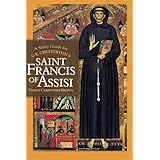
Nancy Carpentier Brown's A Study Guide for G. K. Chesterton's Saint Francis of Assisi.

Finally, a daughter wandering through a used book store in Boston found a First American Edition of The Wisdom of Father Brown  in excellent condition.

Ah.

Delightful reading ahead!.  

Friday, December 21, 2012

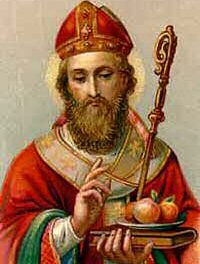
St. Nicholas Clerihew


At Nicaea, St. Nicholas
slapped a naughty Arius.
Since then he's found a list does fine
to help keep those who stray in line.

Thursday, November 22, 2012

Jack Passion's beard (clerihew)


The beard of Jack Passion
transcends conventional fashion.
But I doubt his hirsute ways
includes hair shirts these days.

Monday, November 05, 2012

Shaken not stired

I was wondering if i should go see the new Bond movie, Skyfall, or wait for the DVD. well... since the Vatican has given it's supernatural praise to this film I will go and see it on the BIG screen. Personally I can't remember such a glowing review of any secular movie from the "red hats".


My favorite review of the review was by Darren Franich
Can we get an 'Amen'? The Vatican loves 'Skyfall'
Providing further evidence that the modern Catholic Church ain’t your mama’s Catholic Church, the Vatican’s film critic has written a full-throated support of Skyfall, praising the film’s “adrenalin pumping action, amazing hyper-realistic chases, exotic locations, extremely beautiful Bond girls, the usual super villain, and the essential vodka martini” — all things much enjoyed by the population of the Vatican. (They took a vow of chastity… but nothing wrong with a little window-shopping, amiright boys?)
But it’s not all fun and games: Vatican film critic Gaetano Vallini praises how in Skyfall, James Bond is “less attracted to the pleasures of life, darker and more introspective… more human, even able to be moved and to cry.” You could say that Bond is experiencing a crushing sensation of guilt, which makes it impossible for him to experience joy in a meaningful way. If only there could be a whole belief system built on all-encompassing guilt!
The Skyfall review was actually just one of five Bond-related articles in this week’sL’Osservatore Romano, which also included a profile of Bond creator Ian Fleming, a retrospective of Bond music, and a think piece by Pope Benedict explaining that everyone is wrong about Timothy Dalton — he was just Daniel Craig 20 years before the world was ready for Daniel Craig. Just kidding, the Pope didn’t write that: He gave up on the series after You Only Live Twice.

Wednesday, October 24, 2012

The wrong side of history

"Speaking a few years ago to a group of priests, entirely outside of the current political debate, I was trying to express in overly dramatic fashion what the complete secularization of our society could bring. I was responding to a question and I never wrote down what I said, but the words were captured on somebody’s smart phone and have now gone viral on Wikipedia and elsewhere in the electronic communications world. I am (correctly) quoted as saying that I expected to die in bed, my successor will die in prison and his successor will die a martyr in the public square. What is omitted from the reports is a final phrase I added about the bishop who follows a possibly martyred bishop: “His successor will pick up the shards of a ruined society and slowly help rebuild civilization, as the church has done so often in human history.” What I said is not “prophetic” but a way to force people to think outside of the usual categories that limit and sometimes poison both private and public discourse"
Francis Cardinal George

read the whole letter here

Tuesday, October 23, 2012

WORD


Public witness and Catholic citizenship

Archbishop Charles Chaput
Public witness on issues of public concern is natural for Catholics because we have a commitment to the common good and to the dignity of each human person. Those two pillars — the common good and the dignity of every human person — come right out of Scripture. They underpin all of Catholic social thought.
That includes politics. Politics is where the competing moral visions of a society meet and struggle. And since a large majority of American citizens are religious believers, it makes sense for people and communities of faith to bring their faith into the public square.
As a result, if we believe that a particular issue is gravely evil and damaging to society, then we have a duty, not just a religious duty but also a democratic duty, to hold accountable the candidates who want to allow that evil. Failing to do so is an abuse of responsibility on our part, because that’s where we exercise our power as citizens most directly — in the voting booth.
The “separation of Church and state” can never mean that religious believers should be silent about legislative issues, the appointment of judges or public policy. It’s not the job of the Church to sponsor political candidates. But it’s very much the job of the Church to guide Catholics to think and act in accord with their faith.

So since this is an election year, here are a few simple points to remember as we move toward November.
1. “Catholic” is a word that has real meaning. We don’t control or invent that meaning as individuals. We inherit it from the Gospel and the experience of the Church over the centuries. If we choose to call ourselves Catholic, then that word has consequences for what we believe and how we act.  We can’t truthfully call ourselves “Catholic” and then behave as if we’re not.
2. Being a Catholic is a bit like being married. We have a relationship with the Church and with Jesus Christ that’s similar to being a spouse. If a man says he loves his wife, his wife will want to see the evidence in his fidelity. The same applies to our relationship with God. If we say we’re Catholic, we need to show that by our love for the Church and our fidelity to what she teaches and believes. Otherwise we’re just fooling ourselves. God certainly won’t be fooled.
3. The Church is not a political organism. She has no interest in partisanship because getting power or running governments is not what she’s about, and the more closely she identifies herself with any single party, the fewer people she can effectively reach.
4. Scripture and Catholic teaching, however, do have public consequences because they guide us in how we should act in relation to one another. Again, Catholic social action, including political action, is a natural byproduct of the Church’s moral message. We can’t call ourselves Catholic, and then simply stand by while immigrants get mistreated, or the poor get robbed, or – even more fundamentally — unborn children get killed. If our faith is real, then it will bear fruit in our public decisions and behaviors, including our political choices.
5. Each of us needs to follow his or her own conscience. But conscience doesn’t emerge miraculously from a vacuum. The way we get a healthy conscience is by submitting it to God’s will; and the way we find God’s will is by listening to the counsel of the Church and trying honestly to live in accord with her guidance. If we find ourselves frequently disagreeing, as Catholics, with the teaching of our own Church on serious matters, then it’s probably not the Church that’s wrong. The problem is much more likely with us.
In the end, the heart of truly faithful citizenship is this: We’re better citizens when we’re more faithful Catholics. The more authentically Catholic we are in our lives, choices, actions and convictions, the more truly we will contribute to the moral and political life of our nation.

Monday, October 22, 2012

Another sign the apocalypse is upon us.


I like food. Boom!, there I said it. I am willing to try new foods - as a matter of fact I was one of the first to try pizza on a stick. So this seemed right in my wheelhouse PBJ in a can cool...I was wrong.
Every generation, sandwich convenience takes a leap forward. Our grandparents saw the first drive-thru restaurant; our children will be the first to try McDonald's McRib I V Bag. For us, it's the Candwich: a peanut butter and jelly sandwich in a can.


"Kids Love It!" it says so right there on the can. This just proves my long-running theory: that kids are dumb.

Frat Boys chug the whole sandwich in one gulp.

The world's gone topsy-turvy. Somewhere, someone is drinking a Miller Lite out of a Ziploc bag.

The flavor is somewhere on the continuum between Play-Doh and Taxicab Air Freshener. But if traditional sandwich packaging never took up enough landfill space for your liking, this is the sandwich for you.


Tuesday, October 16, 2012

The Persian look is back


Yes, I know that we as bearded Catholics did not get that way in a moment of passion but it is the passion for facial hair that keeps us here.

But to groom or not to groom that is the question whether 'tis nobler to let it grow outrageous and free or to take up scissors to trim it  and by grabbing the ends twist them. To comb, to sweep, to droop no more; and by a clip clip here and a dab dab there say we end the heart-ache and the thousand natural shocks our mother's subject us to?


Any way if you manscape a new start-up, the BrooklynGrooming Company, specializes in pomades, beard oils, facial serums and mustache wax all aimed at the tragically hip. The Red Hook Whiskers beard oil, for instance features "mineral rich oils and up lifting herbs in a non-comedgenic, vegan friendly formula".


The good news? economists have adjusted forecasts upward in light of this new product line lessening unemployment, streangthing the GDP and showing the country that the American hipster is willing to spend $50.00 on artistanal beard oil.


Monday, October 15, 2012

Doctor Doctor


It is the Feast day of Teresa of Avila one of my favorite ladies


I am now at an age where this prayer makes big sense my favorite line is: “Keep me reasonably sweet, for a sour old person is one of the crowning works of the devil”.


Lord,
Thou knowest better than I myself
that I am growing older and will someday be old.
Keep me from the fatal habit of thinking
I must say something on every subject and on every occasion.

Release me from craving to
straighten out everybody’s affairs.

Make me thoughtful but not moody;
helpful but not bossy.

With my vast store of wisdom,
it seems a pity not to use it all;
but Thou knowest, Lord,
that I want a few friends at the end.
Keep my mind free from the recital of endless details;
give me wings to get to the point.

Seal my lips on my aches and pains;
they are increasing, and love of rehearsing them
is becoming sweeter as the years go by.

I dare not ask for improved memory,
but for a growing humility and a lessening cock-sureness
when my memory seems to clash with the memories of others.
Teach me the glorious lesson that occasionally I may be mistaken.

Keep me reasonably sweet, for a sour old person
is one of the crowning works of the devil.
Give me the ability to see good things in unexpected places
and talents in unexpected people;
and give, O Lord, the grace to tell them so.
Amen.

- – - prayer by St. Teresa of Avila

She embodies the Chesterton attitude: “He is a sane man who can have tragedy in his heart and comedy in his head.”


Saturday, October 13, 2012

Fluke Clerihew

The last name of Sandra Fluke
rhymes with ... stuck,
which is what she wanted to happen to us with her bills
for birth control pills.
.

Thursday, October 11, 2012

why i have been away


For many weeks now I have been battling a low grade constant sadness. Unable to fully name it I have been snapping at my child followed by quick apologies. I could not tell if I was avoiding my wife or she was avoiding me I did not give it enough thought to repair the rift. She probably thought it was just another of my blue funks that would pass once I started pushing pigment again.

I knew this was different. I was blaming it on overly busy schedule and the way to many funerals I have had to attend of late. Each for an acquaintance that was younger than I. Then I thought it was that my wife's and my car broke down in the same week followed by a quick need for a plumbing repair. No that could not be it those are just the normal low notes of my life the deep harmony to balance the joy. 
It was not until this morning as I drove my wife to work in my daughter's rickety old but drivable van, and shortly after I popped a James McMurtry casset tape in I knew what it was. It was the corn. I said it aloud, "Honey it's the corn look the crop is just a mere shadow of itself".
"Yes. I know."

My little town is surrounded by fields of corn it colors all my comings and goings from spring to the first snow. Something was wrong this year. Normally in September the corn is 'as high as an elephant's eye' but now it was shorter than me and it droops in an uninspired shade of yellow ocher looking like it should have been put on a suicide watch.

The farmers may only harvest half of what they normally would, there will be no corn mazes for Halloween, or bundles of stately corn stalks anchored by pumpkins on my porch.  It was the edge of the Midwest drought that hit us. It was not completely devastating but seriously harmful that made the crop, the environment and my heart just plain miserable.

Soon what did grow will all be harvested and only the stalk stumps will remain and I will lose this feeling.
But now that I know why I am having this small sorrow I can offer it up.

Sunday, September 30, 2012

Rochester Chesterton Conference - revisted


I attended the Rochester (NY) Chesterton Conference September 29th. It's the ninth such conference hosted by the local Chesterton group, and it was one of the best attended ones I've been to. The picture below was taken as people were coming in after a break. Many of these empty seats were actually full. 
 
 
The theme of the days was "History Matters," and we were treated to a number of fine presentations - all delivered with typical Chestertonian levity and wisdom.  
 

Lou Horvath of the Rochester Chesterton Society served as emcee. 


The day began with Christopher Check of Catholic Answers giving us a witty history of the Battle of Lepanto, and then dramatically recited Chesterton's Lepanto - from memory! He deserved the round of applause he received. 

 
David Higbee of Rochester's St. Irenaeus Center then explored the implications of the appearance of Mary at Fatima. Fatima was a wake up call, he said, and suggested that maybe we still need to wake up. The path to heaven is a narrow one, he noted: "I pray more of us will wake up and pursue that narrow way."
 

After lunch, writer and editor Joseph Pearce was welcomed warmly, and not with the customary pretend abuse, which took him off guard. (The "abuse" is a running joke, which he always takes in good humor.) Once he recovered, he talked about the history of true England - Catholic England - dating back to Roman days. 


And then there was Dale Ahlquist, who allegedly has something to do with the American G. K Chesterton Society - President or some such thing. Beside talking about the fish that got away, oh wait, different talk. Actually, Ahlquist talked about Arthur, The Most Famous King Not in History.  Ahlquist pointed out how important Arthur has been celebrated throughout English history up until the modern era, and briefly analyzed the significance of Excalibur, the Round Table, and the Holy Grail. He brought Chesterton in, of course. He also humorously referred to the Dark Ages as the "unlettered interlude in history" (a couple of times, savoring the words).
 
But getting serious, he warned that the Dark Ages are returning. We are witnessing the return of an age of barbarians. But he also reminded us that the Church is the thing that brought us out of those first Dark Ages - and the Church remains.
 
Indeed, amid all the humor and the wit tossed about by the speakers and during conversations between talks and at lunch, there was a subcurrent of concern about the direction our nation and society are taking. A Dark Ages and a return of barbarians? Maybe.
 
Overall, a great conference. On a lighter not, after all my years of attending the conferences and entering the raffles, I finally won something: A wonderful Chesterton tee-shirt! And, of course, I bought some books. Plenty of fine reading awaits
 
And maybe some extra praying as the barbarians draw nearer.

Saturday, September 29, 2012

Saturday, September 15, 2012

Rochester Chesterton Conference

It's coming! It's coming!

The annual Rochester Chesterton Conference is scheduled for Saturday, September 29, at St. John Fisher College in Rochester (actually, in the Rochester suburb of Pittsford, but close enough).

More details to come.

Saturday, September 01, 2012

Belloc and me: Birds of a tar and feather?


This morning while showering a thought occurred to me.

Thoughts often occur to me while showering. I usually grow frustrated because I can't immediately write them down, and always feel that by the time I get to pen and paper I've lost that perfect wording that had come to me as water poured down upon my head. And, of course, shower-inspired ideas are open to being described as all wet.

Be that as it may, today something occurred to me about Hilaire Belloc.

Belloc is, of course, linked with G. K. Chesterton. I am a great fan of GKC. I own dozens of his books and collections of his newspaper essays. I read him regularly, often in sips, getting interrupted and having to mark my spot in whatever book or essay I'm reading. But I always come back, and eventually finish whatever I'm reading, enjoying the experience.

Not so with Belloc. I have tried to read him, but I can't seem to warm up to him, nor have I been able to finish many of his essays and books (except his poetry). As with Chesterton, I am often pulled away while sipping Belloc's prose. But unlike Chesterton, I often do not return to finish, or even feel a desire to do so.

I've wondered about that. Is there something amiss in me. (Okay, that's a given.) People I respect swear by Belloc. Why do I feel I'm more likely to swear at Belloc?

But as the water washed away the shampoo in my eyes this morning, that thought I alluded to earlier struck me.

Maybe I have a hard time warming up to Belloc because he reminds too much of me.

Belloc earned the nickname "Old Thunder" because of his combative style. Chesterton could argue, then make friends with his foes. I can imagine him heading off to the pub after a debate and tossing back a few  with whomever he had recently been arguing. Belloc seemed more likely to argue and turn friends into foes. If he showed up in a pub where his foe was drinking, I could imagine Belloc getting a drink tossed in his face.

When if comes to arguing, I am like Belloc. I fight well, fiercely, unrelentingly. I'm like a dog that clamps my jaws on my opponent's argument and refuses to let go until my opponent gives up, flees, or dies. Along the way I antagonize, I enrage, I create bad blood with whomever I'm battling.

As a result, I've alienated friends. I've kept other people from becoming friends. I've ended up wearing out my welcome in many places.

And I get sworn at. (So far no drinks tossed in my face, though.)

I am not happy about this.

So when I read Belloc, maybe I see too much that reminds me of things I don't like about myself.

Maybe.

Or maybe that idea really is all wet.