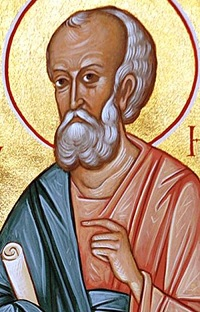
became justly famous
not for his cookie baking skill,
but for proclaiming God's will.
BOOK PICK: New edition of 1910 classic packs relevance today.

Sophia Institute Press has just republished a book with a title that is as perennial as it is thought-provoking: What’s Wrong With the World by G.K. Chesterton.
Essentially a book of political philosophy, Chesterton lampoons, with forensic wit, what were then faddish ideas in Edwardian Britain. His four targets are: large corporations, even bigger governments, feminism and education. These and the then thinking underpinning them are the public “wrongs” he identifies, alongside an overarching one, namely, man’s fallen human nature.
First published in 1910, one may well ask: What does What’s Wrong With the World have to say to today’s world?
Depressingly, the same wrongs are with us still, if receiving fresh expression in the 21st century. Helpfully, Chesterton not only identifies “what’s wrong” with the world but also points out that what people, often erroneously, think is wrong, and then wherein lies the cure of the world’s ills. ...
You can read the rest of this fine review/essay from the National Catholic Register here - https://www.ncregister.com/features/chesterton-is-right-about-what-s-wrong-with-the-world

Charles Williams in Letters & Remembrances - LOVE DURING WARTIME - By Cicero Bruce
"... Williams’s part in this prolific exchange is accessible thanks to the dutiful research of Roma A. King Jr. King’s edition of Williams’s personal correspondence, published in 2002 under the title To Michal from Serge: Letters from Charles Williams to His Wife Florence, 1939-1945, includes representative selections, painstakingly transcribed by King, from nearly 700 hurriedly handwritten letters. In them we hear Williams at his best — as faithful Christian, loyal husband, caring father, and generous friend — and, occasionally, at his worst — as one who loved human beings but sometimes found them intolerable. What resounds above all else is the voice of a man “honestly struggling,” as King puts it in his introduction, “toward the light beyond the darkness.” ...

The most recent issue again turns to Chesterton, taking the title of Pearce's own highly-regarded biography of Chesterton, Wisdom and Innocence: A Life of G.K. Chesterton, and using it as a focus for the issue.
Among the articles:
"The Wisdom and Innocence of G.K. Chesterton" by Joseph Pearce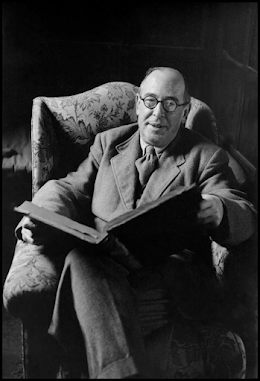
"Perhaps to our surprise, this third Lewis, the medievalist, emerges in the 1962 list that he shared with The Christian Century. When Lewis replied to the editors, he mentioned ten books that shaped his sense of vocation and his philosophy of life, some of which we would expect: 1) George MacDonald’s Phantastes; 2) G.K. Chesterton’s Everlasting Man; 3) Virgil’s Aeneid; 4) The Temple, by George Herbert; 5) William Wordsworth’s Prelude; 6) Rudolf Otto’s The Idea of the Holy; 7) Boethius’s Consolation of Philosophy; 8) The Life of Samuel Johnson, by James Boswell; 9) Descent into Hell, by Charles Williams; and 10) Arthur James Balfour, Theism and Humanism. Some of these books, even if they have been largely forgotten by us, make sense in light of Lewis’s interest in apologetics. ..."
The essay is an adaptation of the introductory chapter of The Medieval Mind of C.S. Lewis: How the Great Book Shaped a Great Mind.
You can read the full essay here.
He did not dwell on his Scottish roots - he viewed himself as English - though he did have a fondness for Robert Louis Stevenson. And he did discuss Mary, Queen of Scots, including an essay (reprinted in the Ignatius edition of Lepanto) called "If Don Juan of Austria Had Married Mary Queen of Scots." I'll deal with that essay in a later post..
In All Things Considered, he did include an essay dealing with Scotland, declaring in it “I am quite certain that Scotland is a nation; I am quite certain that nationality is the key of Scotland.”
Here is the essay:
Edward VII. and Scotland
IHAVE received a serious, and to me, at any rate, an impressive remonstrance from the Scottish Patriotic Association. It appears that I recently referred to Edward VII. of Great Britain and Ireland, King, Defender of the Faith, under the horrible description of the King of England. The Scottish Patriotic Association draws my attention to the fact that by the provisions of the Act of Union, and the tradition of nationality, the monarch should be referred to as the King of Britain. The blow thus struck at me is particularly wounding because it is particularly unjust. I believe in the reality of the independent nationalities under the British Crown much more passionately and positively than any other educated Englishman of my acquaintance believes in it. I am quite certain that Scotland is a nation; I am quite certain that nationality is the key of Scotland; I am quite certain that all our success with Scotland has been due to the fact that we have in spirit treated it as a nation. I am quite certain that Ireland is a nation; I am quite certain that nationality is the key to Ireland; I am quite certain that all our failure in Ireland arose from the fact that we would not in spirit treat it as a nation. It would be difficult to find, even among the innumerable examples that exist, a stronger example of the immensely superior importance of sentiment to what is called practicality than this case of the two sister nations. It is not that we have encouraged a Scotchman to be rich; it is not that we have encouraged a Scotchman to be active; it is not that we have encouraged a Scotchman to be free. It is that we have quite definitely encouraged a Scotchman to be Scotch.
A vague, but vivid impression was received from all our writers of history, philosophy, and rhetoric that the Scottish element was something really valuable in itself, was something which even Englishmen were forced to recognise and respect. If we ever admitted the beauty of Ireland, it was as something which might be loved by an Englishman but which could hardly be respected even by an Irishman. A Scotchman might be proud of Scotland; it was enough for an Irishman that he could be fond of Ireland. Our success with the two nations has been exactly proportioned to our encouragement of their independent national emotion; the one that we would not treat nationally has alone produced Nationalists. The one nation that we would not recognise as a nation in theory is the one that we have been forced to recognise as a nation in arms. The Scottish Patriotic Association has no need to draw my attention to the importance of the separate national sentiment or the need of keeping the Border as a sacred line. The case is quite sufficiently proved by the positive history of Scotland. The place of Scottish loyalty to England has been taken by English admiration of Scotland. They do not need to envy us our titular leadership, when we seem to envy them their separation.
I wish to make very clear my entire sympathy with the national sentiment of the Scottish Patriotic Association. But I wish also to make clear this very enlightening comparison between the fate of Scotch and of Irish patriotism. In life it is always the little facts that express the large emotions, and if the English once respected Ireland as they respect Scotland, it would come out in a hundred small ways. For instance, there are crack regiments in the British Army which wear the kilt—the kilt which, as Macaulay says with perfect truth, was regarded by nine Scotchmen out of ten as the dress of a thief. The Highland officers carry a silver-hilted version of the old barbarous Gaelic broadsword with a basket-hilt, which split the skulls of so many English soldiers at Killiecrankie and Prestonpans. When you have a regiment of men in the British Army carrying ornamental silver shillelaghs you will have done the same thing for Ireland, and not before—or when you mention Brian Boru with the same intonation as Bruce.
Let me be considered therefore to have made quite clear that I believe with a quite special intensity in the independent consideration of Scotland and Ireland as apart from England. I believe that, in the proper sense of the words, Scotland is an independent nation, even if Edward VII. is the King of Scotland. I believe that, in the proper sense of words, Ireland is an independent nation, even if Edward VII. is King of Ireland. But the fact is that I have an even bolder and wilder belief than either of these. I believe that England is an independent nation. I believe that England also has its independent colour and history, and meaning. I believe that England could produce costumes quite as queer as the kilt; I believe that England has heroes fully as untranslateable as Brian Boru, and consequently I believe that Edward VII. is, among his innumerable other functions, really King of England. If my Scotch friends insist, let us call it one of his quite obscure, unpopular, and minor titles; one of his relaxations. A little while ago he was Duke of Cornwall; but for a family accident he might still have been King of Hanover. Nor do I think that we should blame the simple Cornishmen if they spoke of him in a rhetorical moment by his Cornish title, nor the well-meaning Hanoverians if they classed him with Hanoverian Princes.
Now it so happens that in the passage complained of I said the King of England merely because I meant the King of England. I was speaking strictly and especially of English Kings, of Kings in the tradition of the old Kings of England. I wrote as an English nationalist keenly conscious of the sacred boundary of the Tweed that keeps (or used to keep) our ancient enemies at bay. I wrote as an English nationalist resolved for one wild moment to throw off the tyranny of the Scotch and Irish who govern and oppress my country. I felt that England was at least spiritually guarded against these surrounding nationalities. I dreamed that the Tweed was guarded by the ghosts of Scropes and Percys; I dreamed that St. George's Channel was guarded by St. George. And in this insular security I spoke deliberately and specifically of the King of England, of the representative of the Tudors and Plantagenets. It is true that the two Kings of England, of whom I especially spoke, Charles II. and George III., had both an alien origin, not very recent and not very remote. Charles II. came of a family originally Scotch. George III. came of a family originally German. But the same, so far as that goes, could be said of the English royal houses when England stood quite alone. The Plantagenets were originally a French family. The Tudors were originally a Welsh family. But I was not talking of the amount of English sentiment in the English Kings. I was talking of the amount of English sentiment in the English treatment and popularity of the English Kings. With that Ireland and Scotland have nothing whatever to do.
Charles II. may, for all I know, have not only been King of Scotland; he may, by virtue of his temper and ancestry, have been a Scotch King of Scotland. There was something Scotch about his combination of clear-headedness with sensuality. There was something Scotch about his combination of doing what he liked with knowing what he was doing. But I was not talking of the personality of Charles, which may have been Scotch. I was talking of the popularity of Charles, which was certainly English. One thing is quite certain: whether or no he ever ceased to be a Scotch man, he ceased as soon as he conveniently could to be a Scotch King. He had actually tried the experiment of being a national ruler north of the Tweed, and his people liked him as little as he liked them. Of Presbyterianism, of the Scottish religion, he left on record the exquisitely English judgment that it was "no religion for a gentleman." His popularity then was purely English; his royalty was purely English; and I was using the words with the utmost narrowness and deliberation when I spoke of this particular popularity and royalty as the popularity and royalty of a King of England. I said of the English people specially that they like to pick up the King's crown when he has dropped it. I do not feel at all sure that this does apply to the Scotch or the Irish. I think that the Irish would knock his crown off for him. I think that the Scotch would keep it for him after they had picked it up.
For my part, I should be inclined to adopt quite the opposite method of asserting nationality. Why should good Scotch nationalists call Edward VII. the King of Britain? They ought to call him King Edward I. of Scotland. What is Britain? Where is Britain? There is no such place. There never was a nation of Britain; there never was a King of Britain; unless perhaps Vortigern or Uther Pendragon had a taste for the title. If we are to develop our Monarchy, I should be altogether in favour of developing it along the line of local patriotism and of local proprietorship in the King. I think that the Londoners ought to call him the King of London, and the Liverpudlians ought to call him the King of Liverpool. I do not go so far as to say that the people of Birmingham ought to call Edward VII. the King of Birmingham; for that would be high treason to a holier and more established power. But I think we might read in the papers: "The King of Brighton left Brighton at half-past two this afternoon," and then immediately afterwards, "The King of Worthing entered Worthing at ten minutes past three." Or, "The people of Margate bade a reluctant farewell to the popular King of Margate this morning," and then, "His Majesty the King of Ramsgate returned to his country and capital this afternoon after his long sojourn in strange lands." It might be pointed out that by a curious coincidence the departure of the King of Oxford occurred a very short time before the triumphal arrival of the King of Reading. I cannot imagine any method which would more increase the kindly and normal relations between the Sovereign and his people. Nor do I think that such a method would be in any sense a depreciation of the royal dignity; for, as a matter of fact, it would put the King upon the same platform with the gods. The saints, the most exalted of human figures, were also the most local. It was exactly the men whom we most easily connected with heaven whom we also most easily connected with earth.
We’ve had a small late March snowstorm a couple of days ago. In Western New York, this is not unusual. I’ve experienced April snow here.
There was enough snow I had to do a little shoveling of the driveway.
I like shoveling snow. It’s a physical activity, albeit, a short-lived one. But it makes me feel … virtuous. And there’s a sense of accomplishment as I clear a path for the cars. And it gives me time to think, to pray, to mull over my latest writing project or what I should have said (or might say).
When the snowfall is heavier, as it was earlier this year, I’ve even had to get out the small electric snowblower my daughters kindly gave me one Christmas. I like to shovel, but I’m not a masochist.
My wife, however, frets any time I go out to clear snow off the driveway. She is certain I will at some point have a heart attack and drop dead. Shovel in hand. She keeps bringing up the idea of hiring someone to plow.
When she brings this up, I usually respond I don’t want to hire a plowing service. And if I do drop dead, it’s actually one of the ways I wouldn’t mind going into the great beyond. It would be sudden; no lingering.
Another way I wouldn’t mind going is mowing the lawn. It’s also an activity I enjoy for many of the same reasons I enjoy shoveling the driveway. And it’s another activity my wife frets about and repeatedly calls for hiring an outsider to battle the grass.
So far, I’ve held off giving in to her.
There’s also a romantic side to me, so if I had to go I wouldn’t mind if it was in some heroic way. I’m too old to be a soldier, a police officer, or a firefighter, so I wouldn’t go into the heavenly realms doing my job. But dying while saving someone during some kind of disaster - natural or man-made - would be a fine way to step into the light.
Another romantic way to go would be as a martyr. Yes, that might be slow and/or painful, but dying for my faith in such a way would make up for some (too many) sins in my past, and would (I hope) punch my ticket into heaven.
I’ve joked that when my time comes, family members should just drive me deep into the Canadian woods, open the car door, and let me out to sit under a tree to welcome Brother Death. Of course, the fact that I might also have to deal with Brother Bear or Brother Wolf makes me reject this option.
When I look at the ways I wouldn’t mind dying, I think of Dylan Thomas’s admonition not to go gentle into that good night. Go down fighting. Don’t go with the current like a dead thing, as Chesterton noted, go against it like a living thing. Confront the forces of nature. Go against the currents of evil or the secular secular culture. Be alive, even as you die.
What I would not like is a slow, lingering slide into that good night. I’ve watched too many loved ones suffer in that way. My father, who in his youth had been a star athlete and even a heavyweight boxer, suffered a massive stroke and spent his last 13 years gradually losing his abilities to walk and to take care of himself. He ended up in a nursing home. He was aware of his decline, and it deeply troubled him.
That’s not for me.
Just give me a shovel and let it snow, let it snow, let it snow.
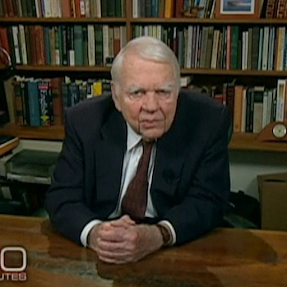
I always enjoyed his commentaries. Yes, he was frequently cranky and a bit of a curmudgeon, but so am I.
When I think of the two men, I can imagine Rooney yelling at the kids to get off his lawn, while Chesterton would amble out and join in whatever game the young folks were playing.
As I read, I was suddenly reminded of the essays of G.K. Chesterton. No, not that Chesteron was cranky or a curmudgeon. He was passionate about issues and ideas, but he never showed in his writing the suggestion of anger that underlies some of Rooney’s. And their writing styles are very different. Colloquial language has changed over the years, and Rooney’s writing appeals more to a contemporary American audience demanding short sentences and simplified language. Rooney’s essays are also short when compared with Chesterton’’s. Again, shortness is more the style of contemporary Americans who are more used to sound bytes than sound explanations. Indeed, some of Rooney’s essays seem to end abruptly, almost at a point where Chesterton would just be warming up. And consequently, Rooney’s essays, while they often make valid points, don’t go far enough, certainly not to the depth of thought and insight a Chesterton essay offers..
But there were some things in Rooney’s essays that did remind me of Cheterton’s.
Rooney, like Chesterton, viewed himself as primarily a journalist.
While Rooney could be cranky with an edge of anger, he never seemed mean-spirited, even in criticizing others. In that, he was like Chesterton, who often made good friends of his foes.
The essays also tend to be very personal in nature - much as were so many of Chesterton’s. In the middle of a discussion of some international subject Rooney will suddenly insert a personal experience or memory inspired by the subject at hand.
But what struck me as most similar is that Rooney, like Chesterton, writes about everything, even commonplace seemingly trivial things. He does not necessarily celebrate them as Chesterton does, but he certainly is aware of them in a way most of us are too busy or oblivious to do so. In this particular collection, Rooney expounds on going to the dump, cookies, music, the Super Bowl, newspapers, cooking, semicolons, baseball, cars, and more. I don’t know if he ever wrote about things he found in his pocket, but you never know.
And as he writes about all these seemingly trivial things he often uses them as starting points to ruminate about the world and human nature. Indeed, as happens in some Chesterton essays, when you get to the end you have almost forgotten what he was originally talking about.
Of course, unlike Chesterton, he tended to focus on the negative, If, for example, both men ate a breakfast cereal, Chesterton would probably celebrate the creativity that went into making that cereal and use that as a jumping off point to expound on human creativity in general, while Rooney would more likely wonder about the chemicals and additives in the cereal and the possible negative effects of eating that cereal on his waistline.
I like both writers. I enjoy reading both. But I also recognize that while the essays of Rooney are of their time, the essays of Chesterton are timeless.
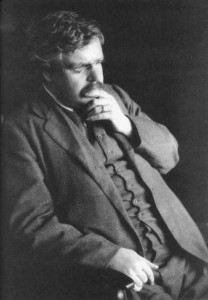


“God Himself will not help us ignore evil, but only to defy and to defeat it.”
I was recently watching Judgment at Nuremberg. If you have never seen it, it's a powerful film with some fine performance. Indeed, Maximilian Schell won the Academy Award for Best Actor. Interestingly, after finishing this move he portrayed Saint Joseph of Cupertino in The Reluctant Saint. Saint Joseph was not a bright light - and I couldn't help but wonder if Schell was inspired in any way by the nominated (as Best Supporting Actor) portrayal of a developmentally limited man by Montgomery Clift in Judgment at Nuremberg.
The movie raises number of moral issues, including the culpability of government officials who did nothing to oppose the growing evil - and indeed were often complicit in it. The four judges on trial in the movie all had "rational" explanations for their crimes, including that they were willing to sacrifice people for the good of the nation.
The movie also addressed the issue of people who say they did not know the evil that was going on.
That ignorance may have been due to a number of causes.
Some people might have been genuinely ill-informed, isolated, impoverished, caught up in mere survival, or mentally challenged that they really did not know. I have sympathy for them.
Others are harder to excuse.
Some people were lazy and relied on others to keep them "informed."
Some people deliberately tried to avoid becoming informed.
Some people were aware - partly, or wholly - but chose denial.
Some people were aware - partly or wholly - but chose to lie.
Some people were aware - partly or wholly - but were too afraid of potential repercussions to do anything.
Some people simply didn't care.
The degree of quilt varied. Certainly the men on trial in the movie deserved to be sentence to prison. But the people of Germany - indeed, of the world - who allowed this evil to occur were not exempt from blame.
As the Chesterton quotation that begins this post suggests, God is not on the side of those who ignore evil - for whatever reason. We are called to recognize and reject evil, not to wallow in ignorance. Indeed, as he observed, “We cannot be vague about what we believe in, what we are willing to fight for, and to die for.”
The movie and the cooperation with evil of so many people reminded me of the evil of abortion in our country. Some people have been directly involved in the killing of more than 60 million babies. Some allowed it to continue through elections, their refusal to acknowledge what organizations like Planned Parenthood really do, and by their failure to act to change the culture and the laws.
Too often they plead that they did not or do not know. Too often, they do nothing to become informed. And they allow the supporters of abortion to justify it because it is supposedly better in some way for individuals, society, the economy, and so on. Some call it a right, or a good thing.
It's like a 1984 twisting of language.
We are seeing what Chesterton noted: “Men do not differ much about what things they will call evils; they differ enormously about what evils they will call excusable.”
Although some involved with abortion have faced charges for related crimes, it is unlikely that others will face a tribunal like that depicted in the movie for the crime of abortion itself. After all, as those accused in the film could legitimately contend about what they did, while it may be a crime against humanity, it is legal.
And those who plead ignorance will not be confronted with the evil they tried to ignore.
At least not in this life.
For in the end, there will be a Final Tribunal that with render a Final Judgment.


I was amused to see we actually have a couple of common ideas - problems with goblins, caves beneath the North Pole, heavy snow, fireworks mishaps, and melting ice and snow. He has a polar bear who means well but causes problems; I have some goofy elves and a human friend who flies a mail plane.

Overall, it's an enjoyable read.

At the time it came out it got mixed reviews, but some Catholic commentators noted that at least it did not attack his faith or distort his life with contemporary obsessions.
I agree that as a film it's, frankly, not that good. "Dull" is the word that comes to mind.
It's not bad, but the pacing is slow, and the structure is flawed, making it kind of confusing. I also found the attempts to link his life with elements in his fiction clumsy.
It did not attack his faith, and one of the strong positive characters is a priest. But given how deep Tolkien's faith was the movie needed to address Catholicism in more detail.
I'm glad I saw it. For fans of Tolkien it's worth watching, though the definitive movie about him is yet to be made. But for non-fans, it's probably not the best introduction to Tolkien. Watch The Lord of the Rings Trilogy instead!


